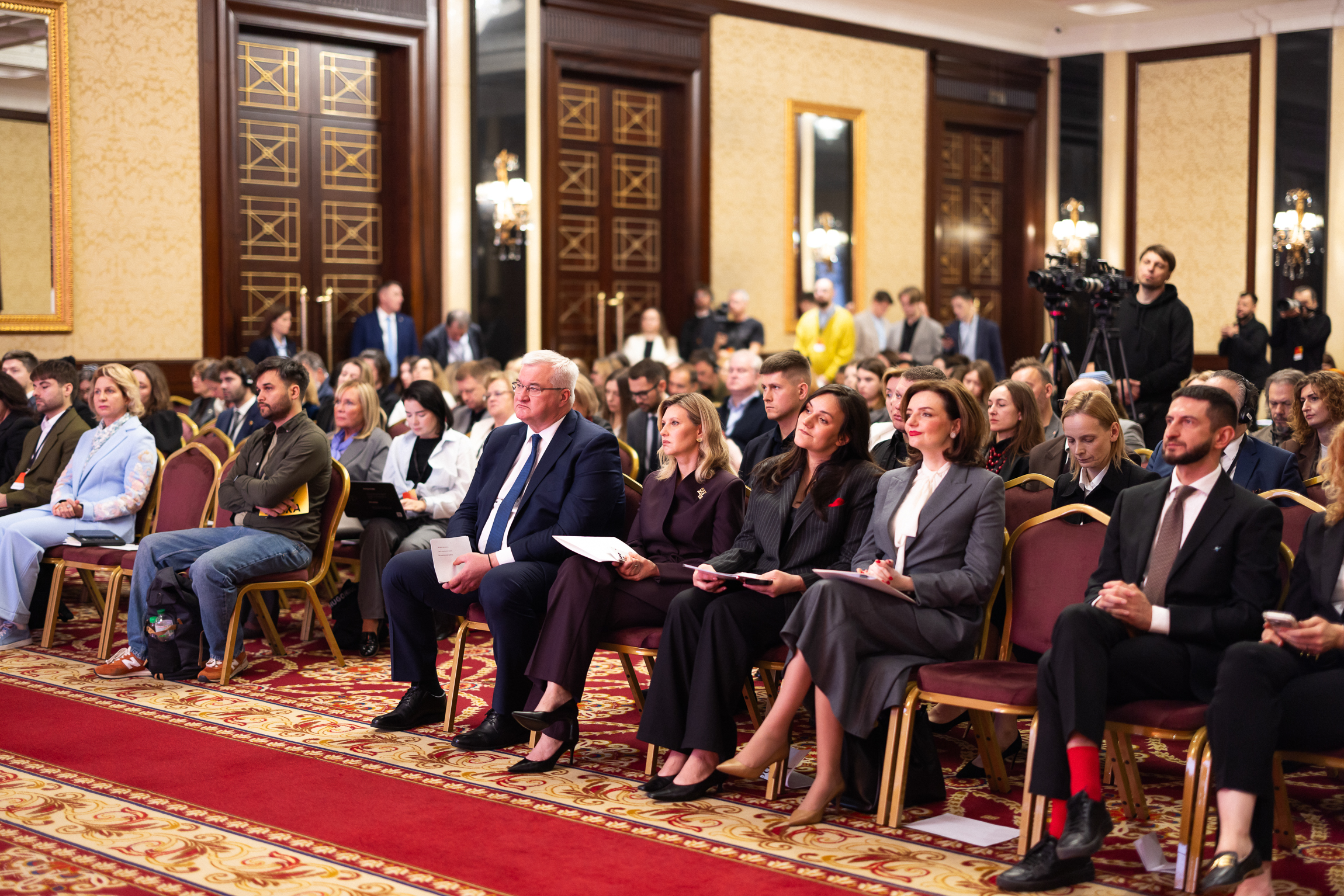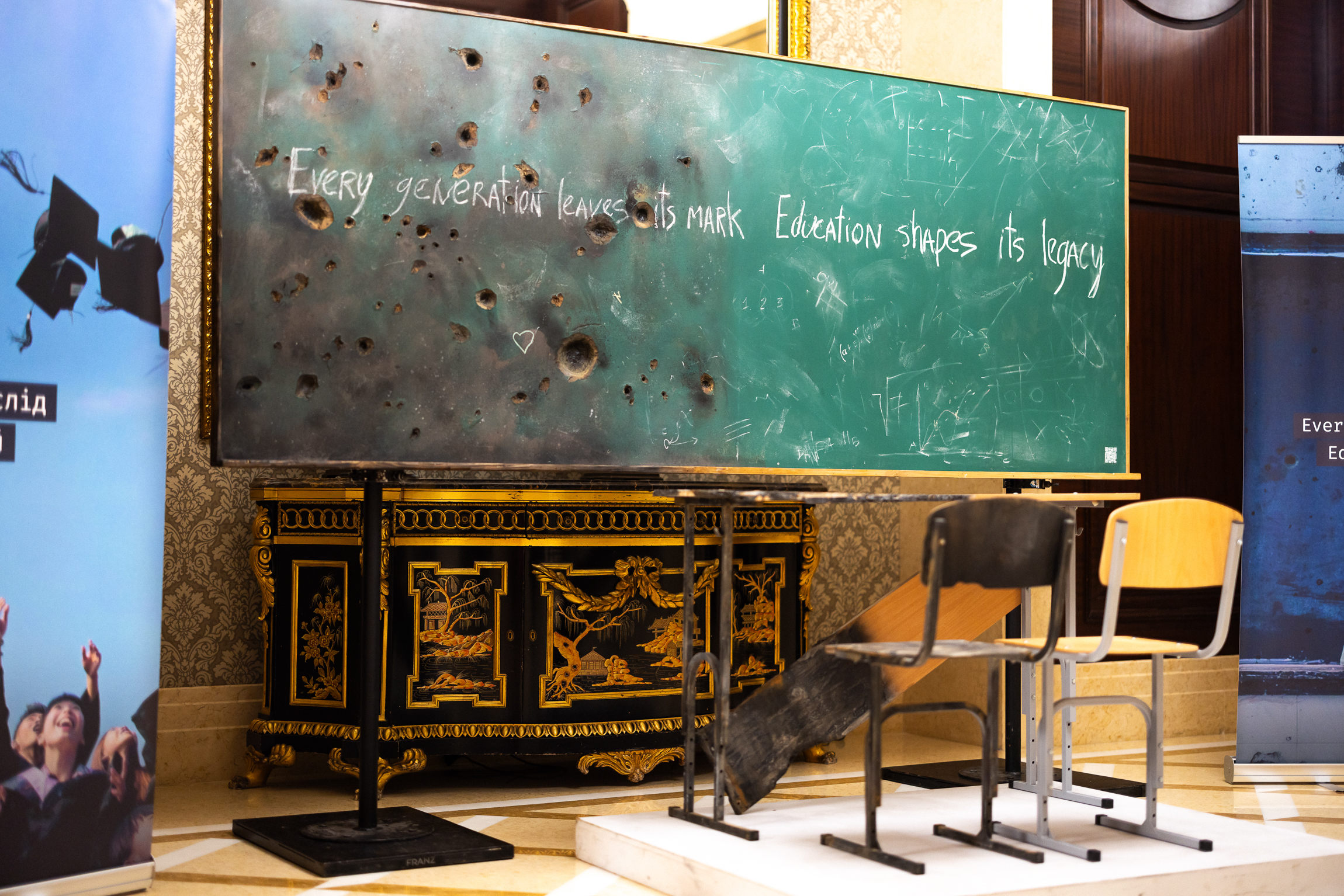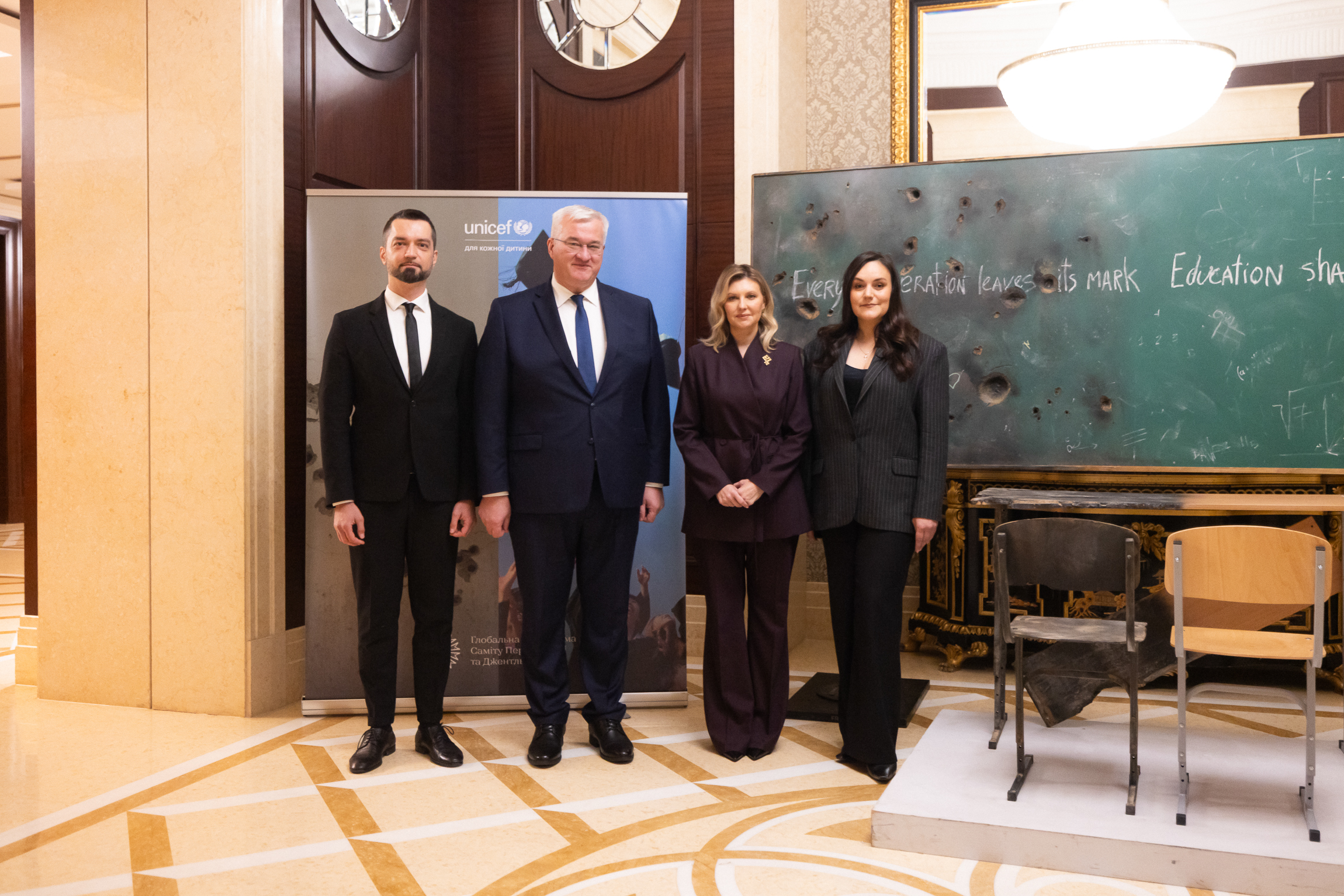
The 7th International Forum on Cultural Diplomacy was held in Kyiv
Leading experts from Ukraine and other countries discussed ideas, practices, challenges, and the future of international cultural diplomacy and cultural relations.
This year’s program brought together representatives from the public sector, international cultural institutions, the academic community, the creative industries, and the civil society sector. Participants discussed the digital dimensions of cultural diplomacy, interdisciplinary approaches to Ukrainian studies around the world, and practices of international cultural cooperation.
The forum began with welcoming remarks by First Lady of Ukraine Olena Zelenska, Minister of Foreign Affairs of Ukraine Andrii Sybiha, and Deputy Prime Minister of Ukraine for Humanitarian Policy—Minister of Culture Tetyana Berezhna.
“Soft power isn’t just about telling the world about Ukraine,” noted First Lady Olena Zelenska. “It’s also about correcting what the world supposedly already knows about us. Because often we’re not starting from a blank slate, but building on someone else’s narrative: about Ukrainian culture, which Russia appropriated and presented as its own, while suppressing, slandering, and distorting it. We started with something simpler—restoring Ukrainian names to our artists and works of art: we had captions changed in museums around the world so that Ukrainian artists would be rightly referred to as Ukrainian, not Russian. But the problem runs much deeper. For decades, people have viewed us through a Russian or Soviet lens. We need people to learn about us from us.”
The Minister of Foreign Affairs defined “return” as the overarching theme of Ukraine’s cultural diplomacy: “The return of our positions. Our artists. The decolonization of our memory. And likewise—the return of our heroes to our Pantheon. The return of our history. And this is also a matter of security. The return of our history and our culture are our existential guarantees of security—guarantees that any attempt to deny our very existence will be laughable and absurd. Ensuring that this is equally well understood on every continent is the key task of our cultural diplomacy,” said Andrii Sybiha.
In her speech, Tetiana Berezhna outlined five priorities that the Ministry of Culture is working on, in which she sees a special role for international cooperation: the protection of Ukraine’s cultural heritage, the continued presence of Ukrainian culture in the world, the decolonization of knowledge about Ukraine and the accurate representation of our culture, the digital preservation and accessibility of culture, countering Russian cultural influence, and accountability for crimes against culture.
Volodymyr Sheiko, Director General of the Ukrainian Institute, noted that the time has come to rethink the very concept of cultural diplomacy. According to him, Ukraine’s experience in this field is truly unique, and therefore we have grounds to challenge established definitions and propose our own.
“In the past, Ukrainian cultural diplomacy primarily addressed the question: What should the world know about Ukraine? Now it must ask a different question: How does the Ukrainian experience help the world better understand itself and its future? This leads to a broader definition of our shared endeavor: cultural diplomacy is the ability to use culture to influence how other societies understand reality and define the boundaries of what is politically possible.”
One of the central themes of the forum was the digital dimension of cultural diplomacy. During a public discussion, experts from Ukraine and Poland discussed the role of digital technologies, innovation, and the creative industries in international cultural exchange. Participants included representatives from GSC Game World (Ukraine), Google Ukraine, WRO Art Center (Poland), and Skeiron (Ukraine), a company specializing in the digital documentation and preservation of Ukraine’s cultural heritage.
The participants paid special attention to Ukraine’s participation in the 2027 Venice Architecture Biennale. During the presentation, they showcased the CO-HATY project, which won the competition, and the concept for the Ukrainian pavilion «CO-HATY. Pool of Questions». A practical highlight of the forum was the presentation of successful international cultural collaborations. Participants reviewed five case studies of Ukraine’s cooperation with France, Indonesia, and Denmark, as well as the implementation of Ukrainian cultural projects on international platforms. These included the Season of Ukraine in France, a collaboration with the Indonesian Studio Klampisan, the opera “The Mothers of Kherson” at the Metropolitan Opera in New York, and the exhibition “Sacred Treasures” from the collection of the Kyiv-Pechersk Lavra at the Victoria & Albert Museum in London.
In the afternoon, the results of a study by the Ukrainian Institute titled “The Representation of Ukraine in Regional Studies in Europe and North America” were presented. The program continued with a discussion on interdisciplinary approaches to Ukrainian studies around the world, featuring Ukrainian and international scholars, security experts, and representatives of the academic community.
The forum concluded with a ceremony to present the “Khvylia / Dalğa” award for promoting the Ukrainian and Crimean Tatar languages around the world. The recipients were university professor Alla Nedashkivska, schoolteachers Olha Polisvyat and Gulnaz Adzhigeldieva, and director and cultural manager Fatima Osman.