
The Ukrainian Pavilion Presented the Exhibition
DAKH (ДАХ): Vernacular Hardcore at the 19th International Architecture Exhibition — La Biennale di Venezia
During the inauguration ceremony, the First Lady of Ukraine, Olena Zelenska, addressed the audience via a video message, thanking the partners and supporters of Ukraine. Olena Zelenska spoke of the loss inflicted by war—not only on homes, but on the very structures of everyday life, education, and culture—and emphasised the urgency and symbolism of the Ukrainian Pavilion’s theme: “We say a roof over our heads when we speak of home, comfort and safety. But all of this is being taken from us with every Russian shelling. More than 300,000 Ukrainian homes have already been physically destroyed. Millions more remain inaccessible to their residents due to occupation. Our education and culture are losing their roofs as well. Russian bombs have already destroyed over 4,000 educational institutions, including three universities, 1,419 cultural heritage sites and 2,233 cultural infrastructure facilities. That is why the project DAKH (ДАХ): Vernacular Hardcore is so symbolic.”
Aliona Shkrum, First Deputy Minister for Communities, Territories and Development, also addressed the audience: “As a Ministry of Development, we are responsible for assessing all the damage to all the roofs in Ukraine during this war. And more than 800,000 roofs of houses were damaged or completely destroyed during three and a half years of war. 800,000 is almost impossible to imagine as a number. It’s more than 300,000 private housing units that were destroyed, 70 university dormitories, and more than 400,000 multi-store buildings. And for you just to understand how much it is in comparison to the number of houses here in Venice. It’s 14 Venices that would have been destroyed in this amount of housing. But we are building. And this project is also about this.”
Viktoria Lialina-Boiko, lead of the public diplomacy and communications at the Ministry of Foreign Affairs of Ukraine, read the letter from the Minister for Foreign Affairs, Andrii Sybiha, emphasising the importance of the such events: “This exhibition is more than a cultural project—it is a meaningful contribution to the conversation on Ukraine’s recovery. It shows that rebuilding is not only a technical or infrastructural matter—it is also about preserving cultural identity, traditions, and communities.”
Tetyana Filevska, Commissioner of the Ukrainian Pavilion and Creative Director of the Ukrainian Institute, introduced the team and thanked the supporters: “The war is still happening, it’s going on. Russian missiles and drones are hitting Ukrainian cities as we speak. Ukrainian civilians are being killed every day, almost no matter where it is. There are no safe places in Ukraine, unfortunately. But despite all of these challenges and all of this tragedy, Ukrainians resist. Ukrainians continue to live, they continue creating, they continue rebuilding. Because we’re the only ones responsible for our future. And we are very grateful for all the support and help we are receiving from the partners worldwide. Because, of course, it’s impossible to resist alone.”
Curators Bogdana Kosmina, Michał Murawski, and Kateryna Rusetska explained the theme of the this year exhibition and introduced the team: “The “hardcore” in the title is used in its original sense as a (vernacular) builders’ word, which refers to the assorted bits of debris and clinker that are crunched together to form a building foundation. The exhibition appeals for an ethics—and politics—of rebuilding, which is rooted in the fragile, but unyielding, hardcore of the Ukrainian (and planetary) commons; and which makes manifest the structures of care, repair, solidarity—and resistance—that sustain it.”
Ilona Demchenko, producer of the Ukrainian Pavilion, told more about the process behind the exhibition: “Everything you see in this pavilion was constructed in Ukraine from Ukrainian materials by the hands of Ukrainian people of very different professions over less than three weeks. All of you are the professional audience, you can imagine. Unfortunately, we were not able to bring the whole team. It would be more than 50 people who contributed to this. But it’s an honour for me to represent them here.”
“Dakh” in Ukrainian means “roof.” The roof is the most basic form of architecture. It provides shelter from the fickle elements and cocoons the mundane routines of everyday life. But in the perilous conjuncture of full-scale war—a fight fought in large part in the skies, by drones and missiles—the roof also becomes the first point of impact for hostile projectiles.
The exhibition DAKH: Vernacular Hardcore juxtaposes the “heritage vernacular” of traditional Ukrainian village housing with the “emergency vernacular” of self-organised reconstruction work carried out under wartime conditions.
DAKH blurs the boundary between wartime and postwar reconstruction—highlighting that the process of repair has no choice but to begin while devastation and danger continue to linger; but, also, that long term processes of reconstruction have much to learn from the rooted intelligence of the emergency vernacular.
Furthermore, repair and shelter alone are insufficient. Reconstruction is meaningless without security, and security remains unattainable without resistance. For over a decade, the Ukrainian sky has been subjected to the relentless assault of the Russian war machine. Adequate and sustainable air defence systems remain a distant and seemingly unattainable goal. In response, over thatched, slate, wooden, metal, and concrete roofs—rural and urban, vernacular and prefabricated—Ukrainians assemble a vast, flying, buzzing shelter: a drone canopy.
The exhibit comprises six elements:
- The core element is DAKH—a dynamic pre-image of a vernacular Ukrainian roof, conceived by architect and artist Bogdana Kosmina.
- Selected materials from the archive of “Atlas of traditional Ukrainian housing from the late 19th to the mid-20th century” — a 50-year monumental research carried out by three generations of women architects: Tamara, Oksana, and Bogdana Kosmina—served as a foundation for the creation of DAKH. The images from the project directly influenced its form, structure, materiality, and spirit.
- AI avatar of architect and ethnographer Tamara Kosmina (1936—2016), who preserved vernacular architecture through decades of expeditions across Ukraine. The installation reimagines independent technologies by connecting personalized artificial intelligence with cultural heritage. Tamara’s digital persona was developed over a year of work by using the Iris tool (a data-independent AI solution that allows ownership and control of data).
- Documentation of emergency vernacular landscapes of war and repair in the Chernihiv, Kyiv, Kharkiv, Sumy, and Zaporizhzhia regions by reconstruction collectives Livyj Bereh (Ihor Okuniev, Vladyslav Sharapa, and Kseniia Kalmus) and KHARPP (Ada Wordsworth).
- Places: Mykolaiv Region, a photographic exploration of war-dehydrated landscapes by artist and writer Yevgenia Belorusets. The work highlights this interdependence through a project dedicated to Mykolaiv Water Utility workers, who have fought since 2022 to sustain water flow in systems devastated by Russian attacks—a crucial lifeline for one of Ukraine’s major cities. Just as roofs shelter above, functioning utilities are the foundation below.
- Drone Canopy—an immersive sound installation, curated by Clemens Poole, inspired by and summoning the power of Klyn, a grassroots drone-building initiative led by Kseniia Kalmus.
DAKH (ДАХ): Vernacular Hardcore will be accompanied by Planetary Hardcore, a nomadic public program launching on 10 May at the Scuola Grande di San Marco in Venice and later moving to locations in Ukraine (Kyiv, Dnipro) and beyond. The goal of Planetary Hardcore is to build connections between Ukraine and other places in which kindred labours of self-organised repair and reconstruction coalesce in the midst of war.
More information regarding the public programme is available at the website.
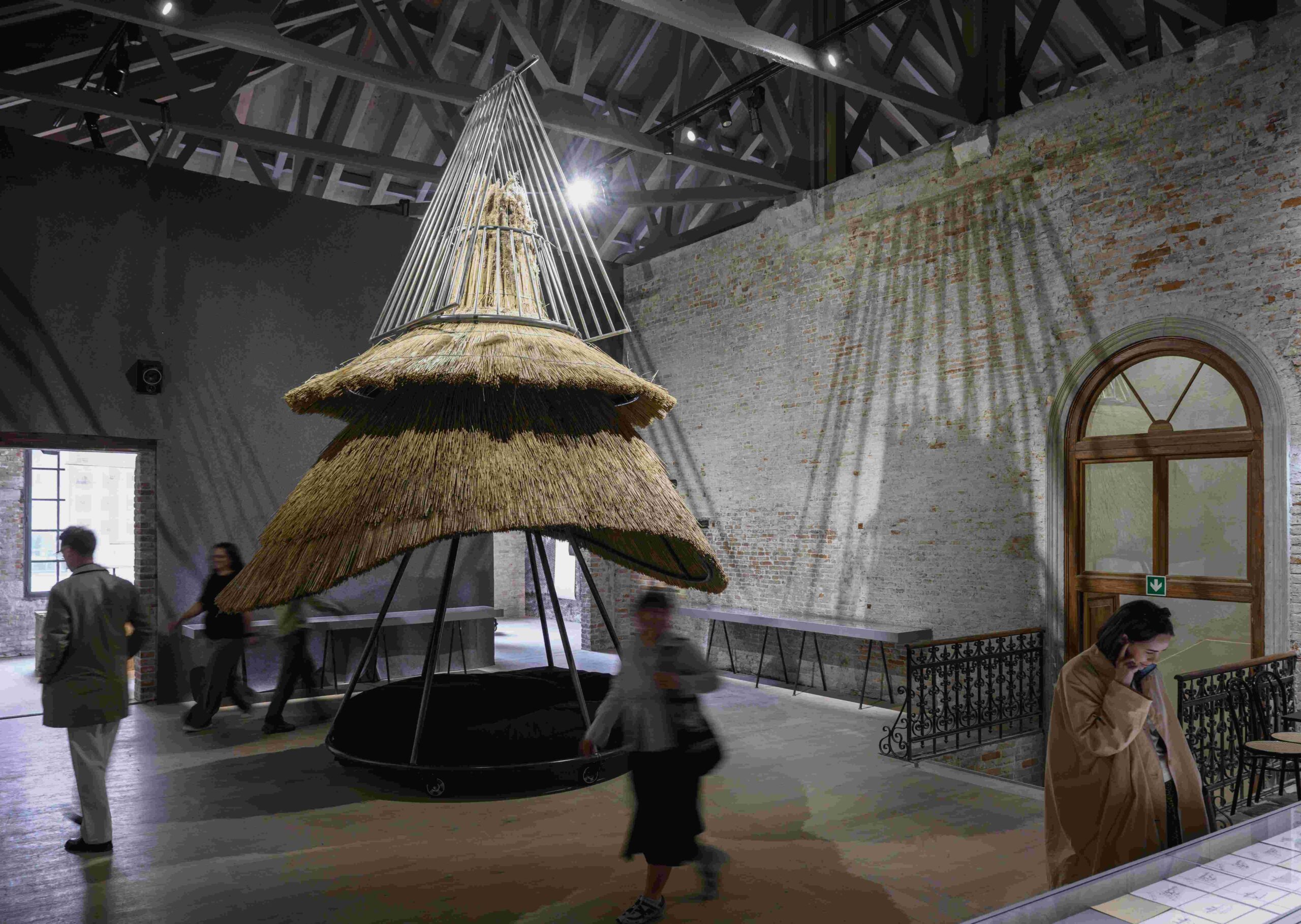
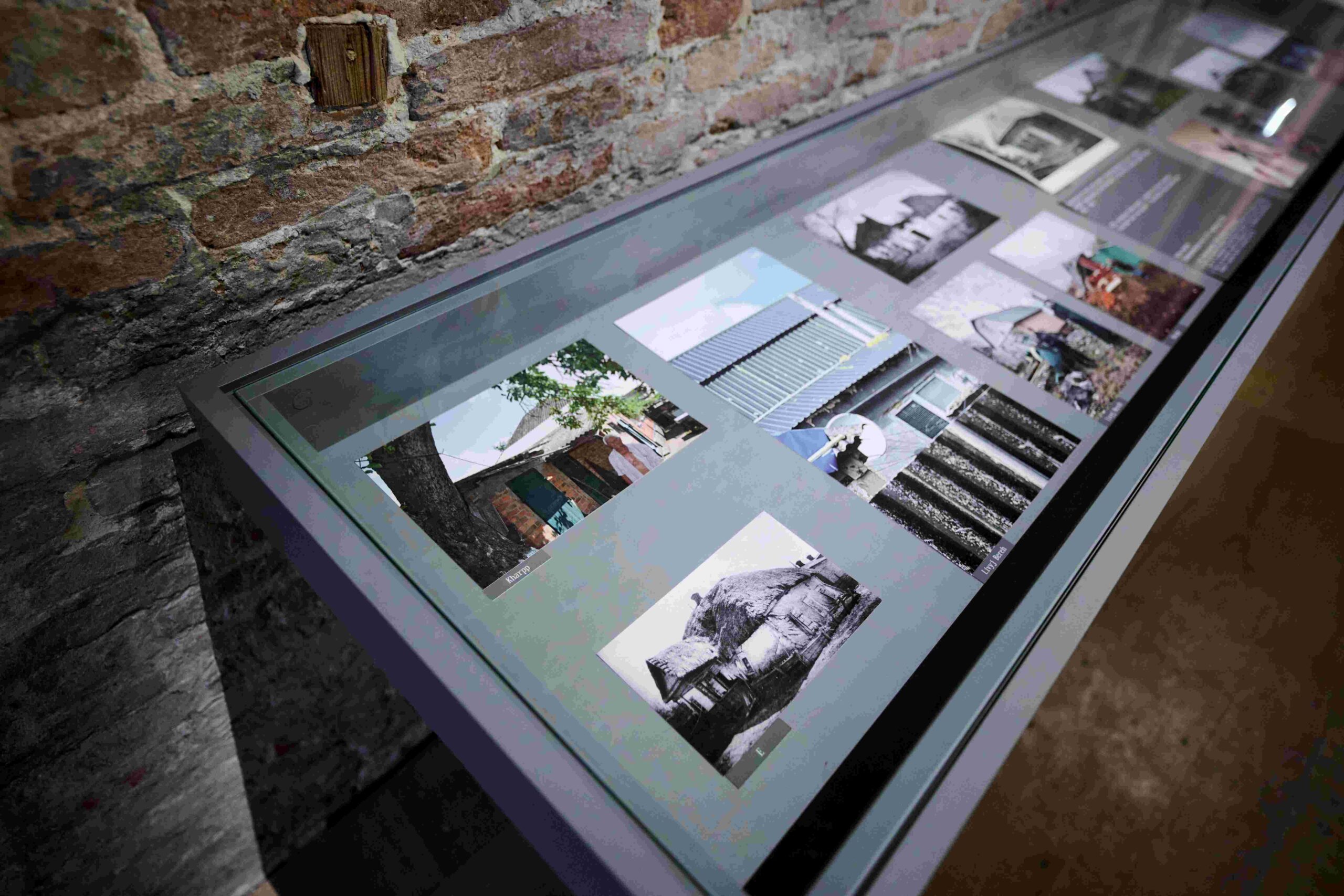
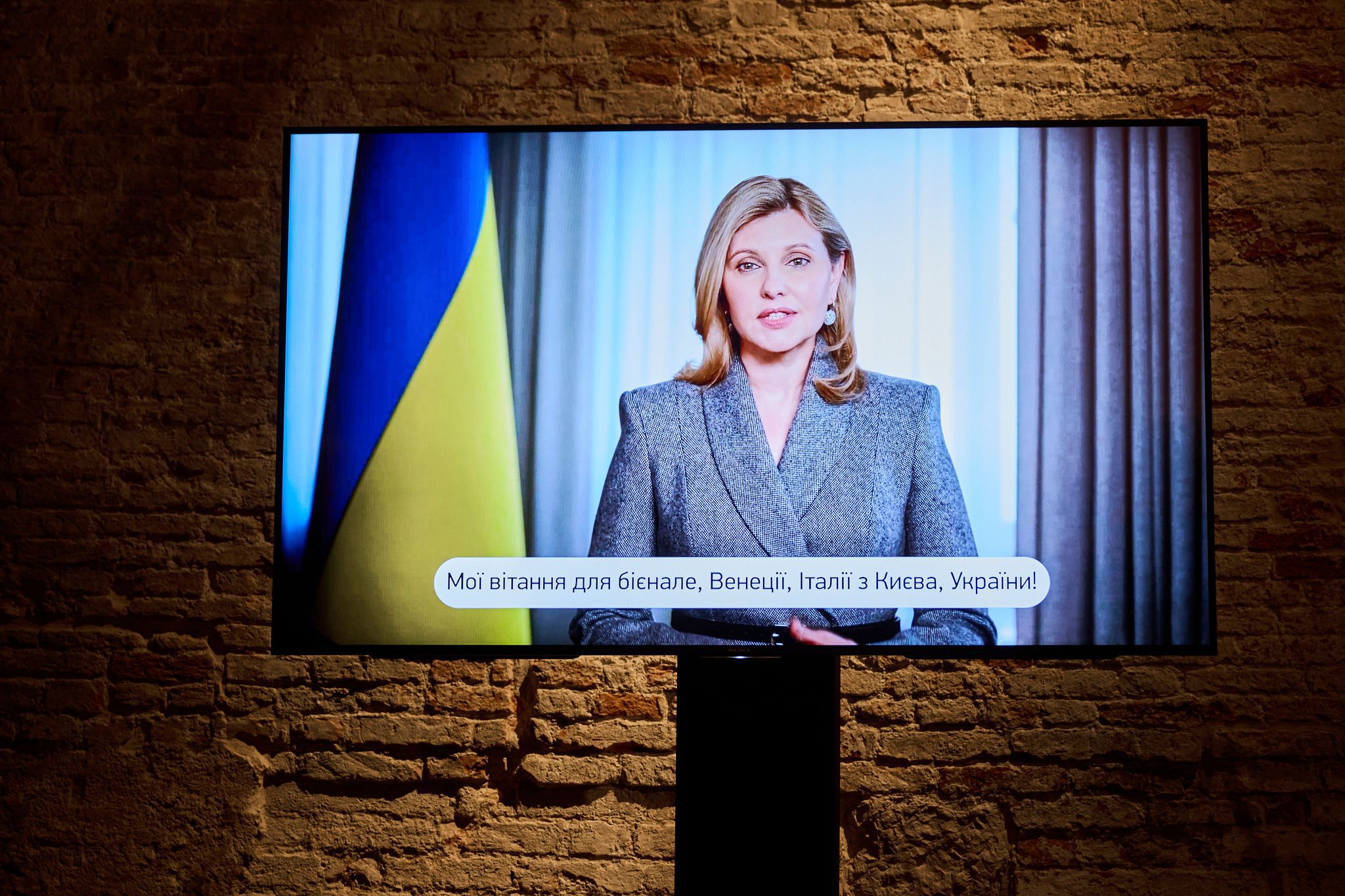
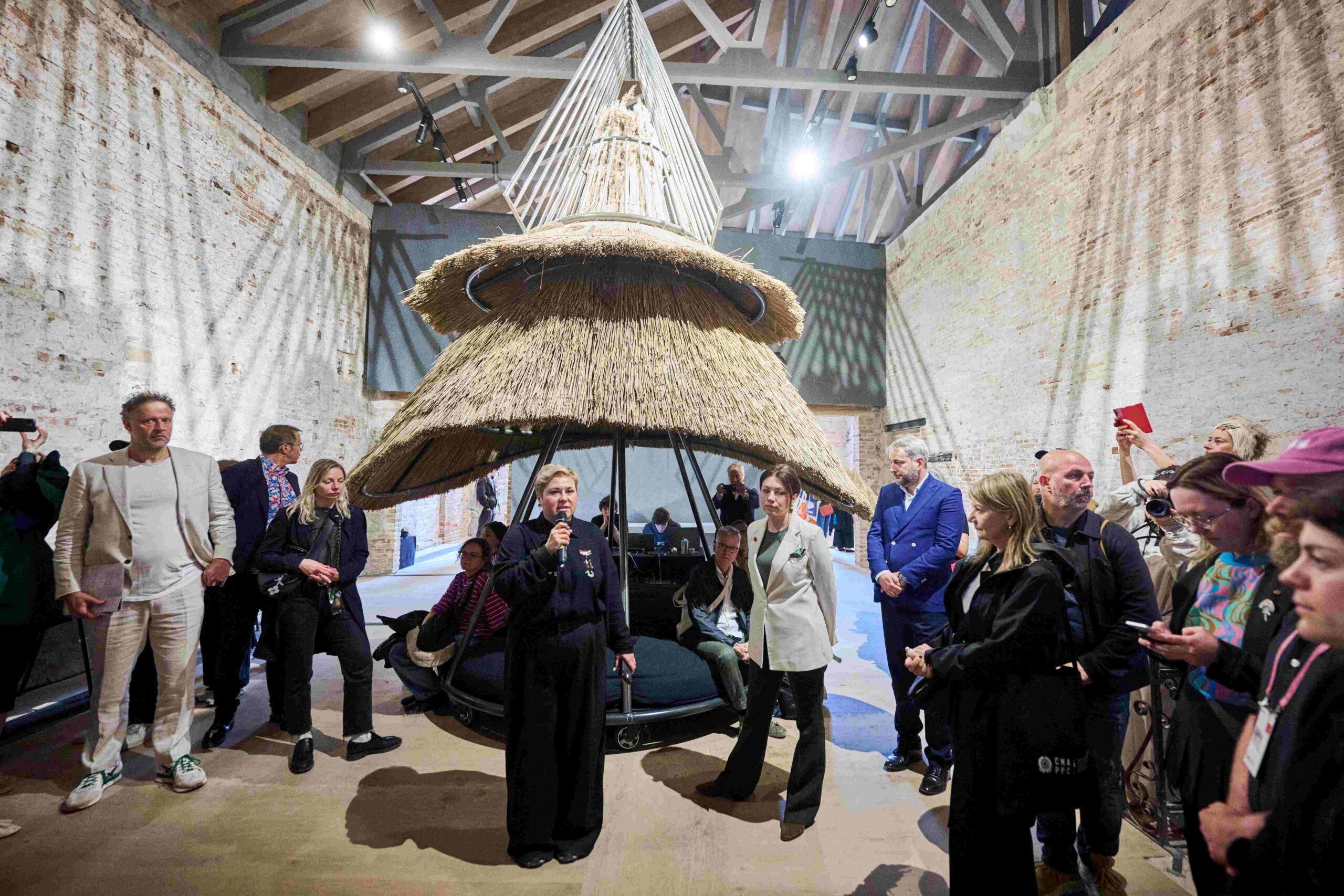
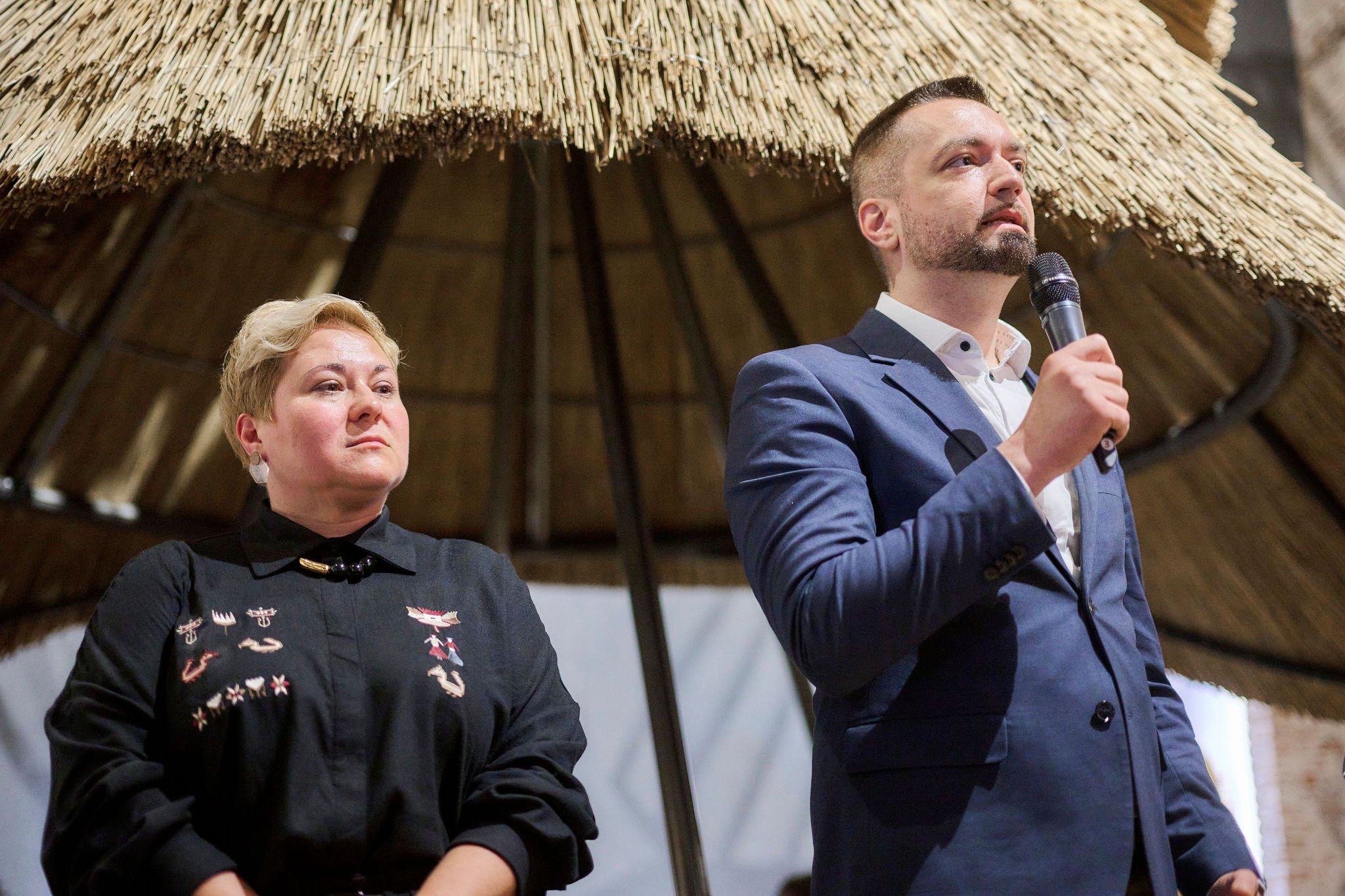
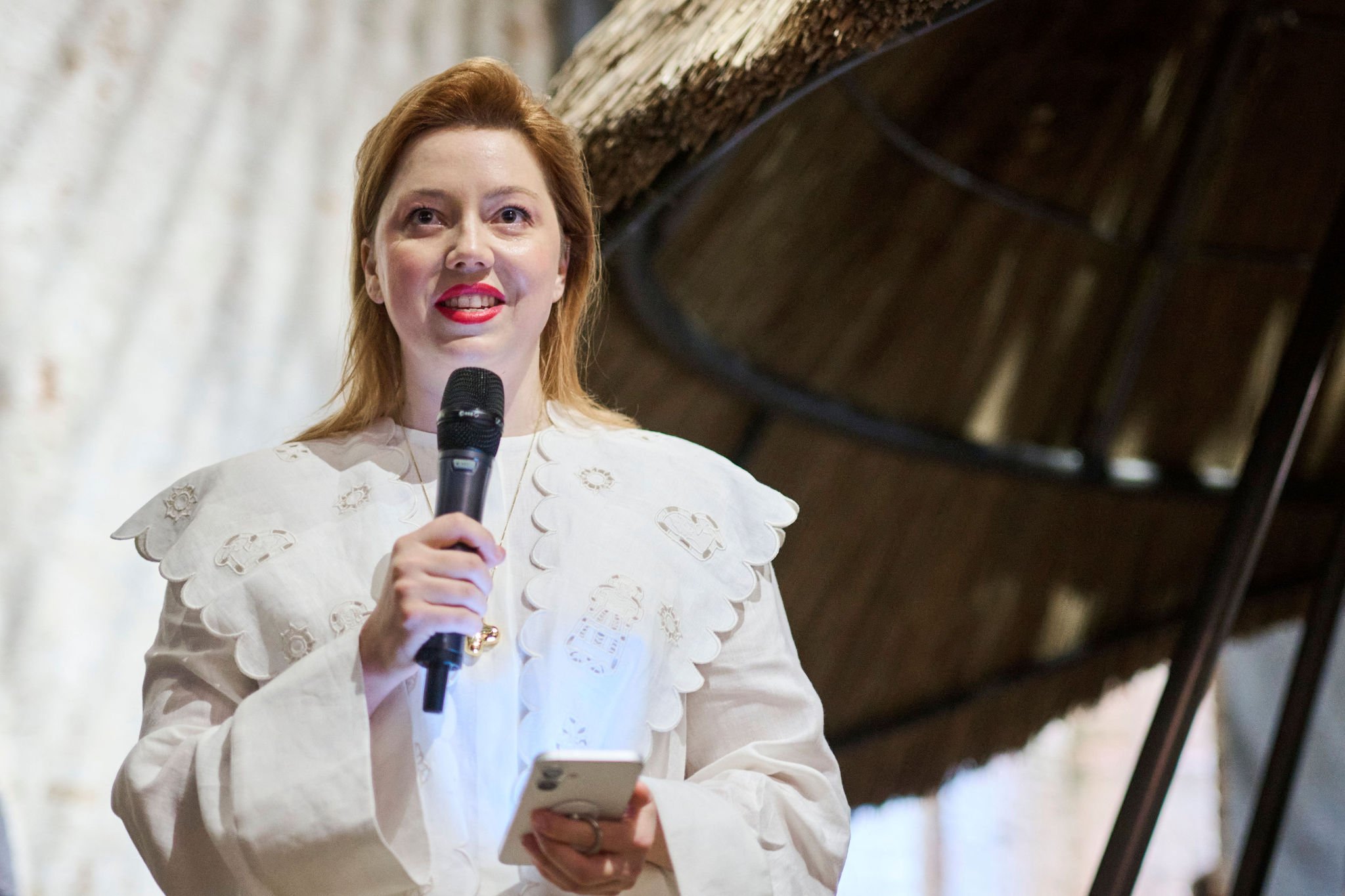
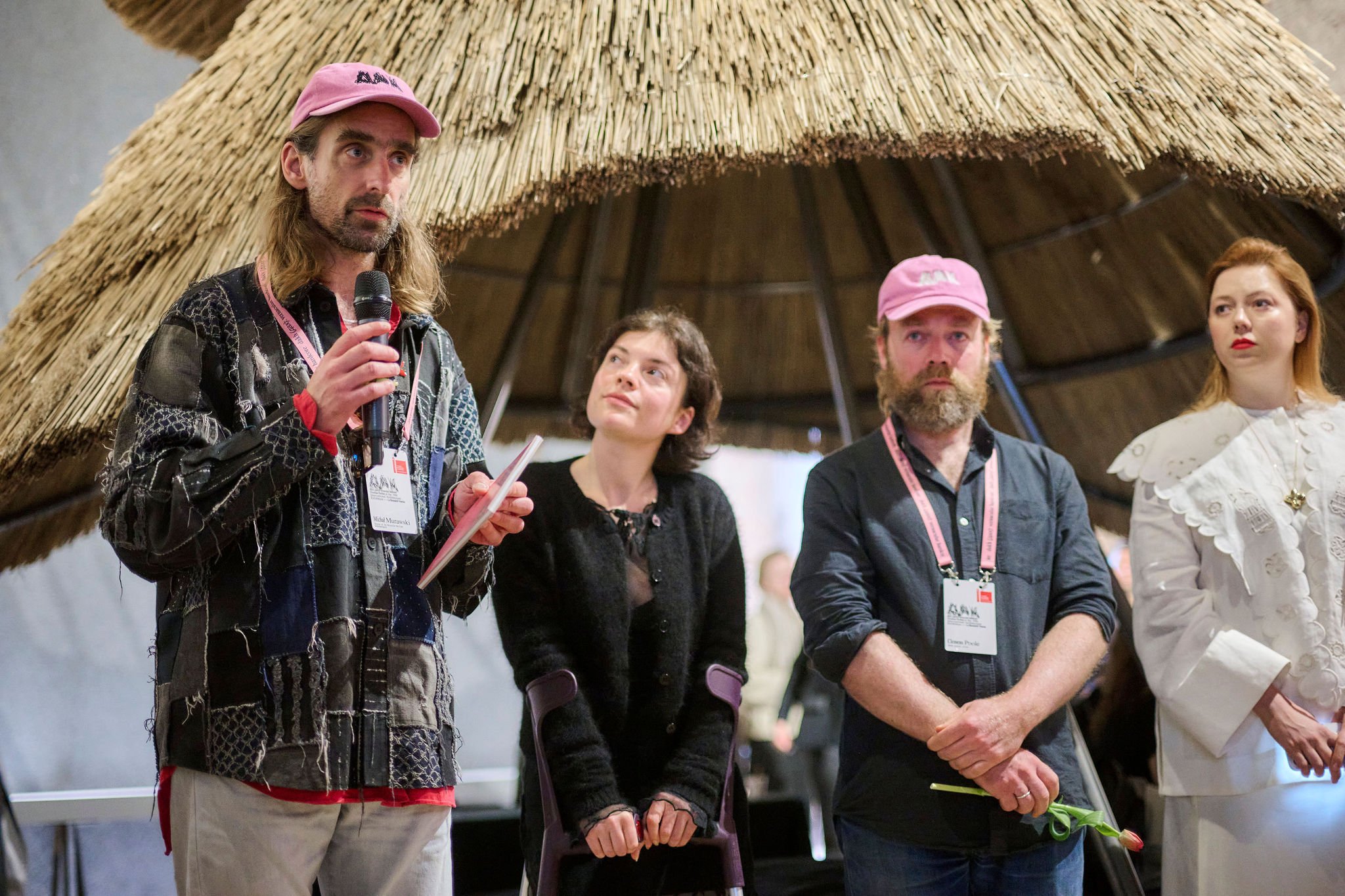
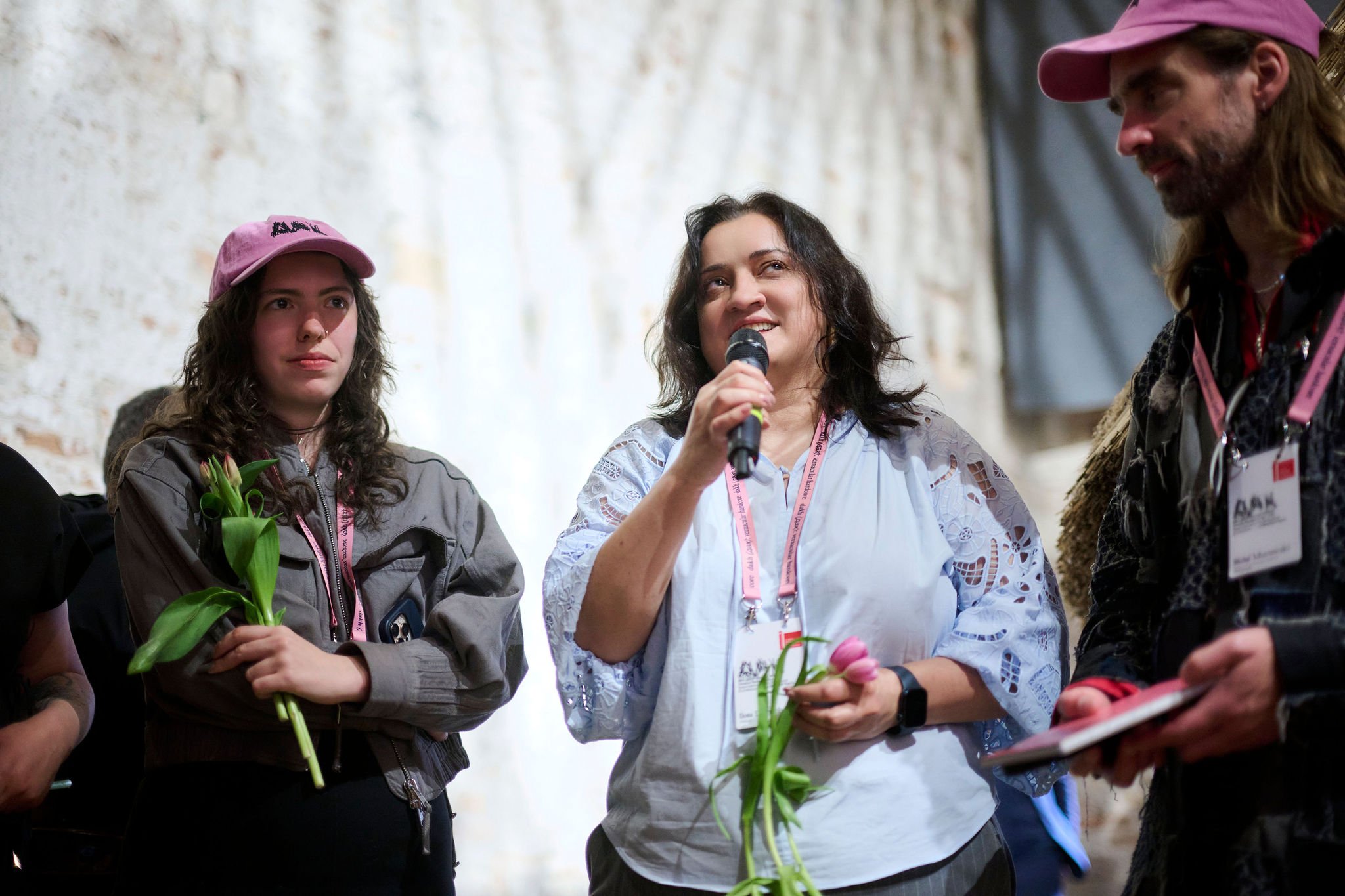
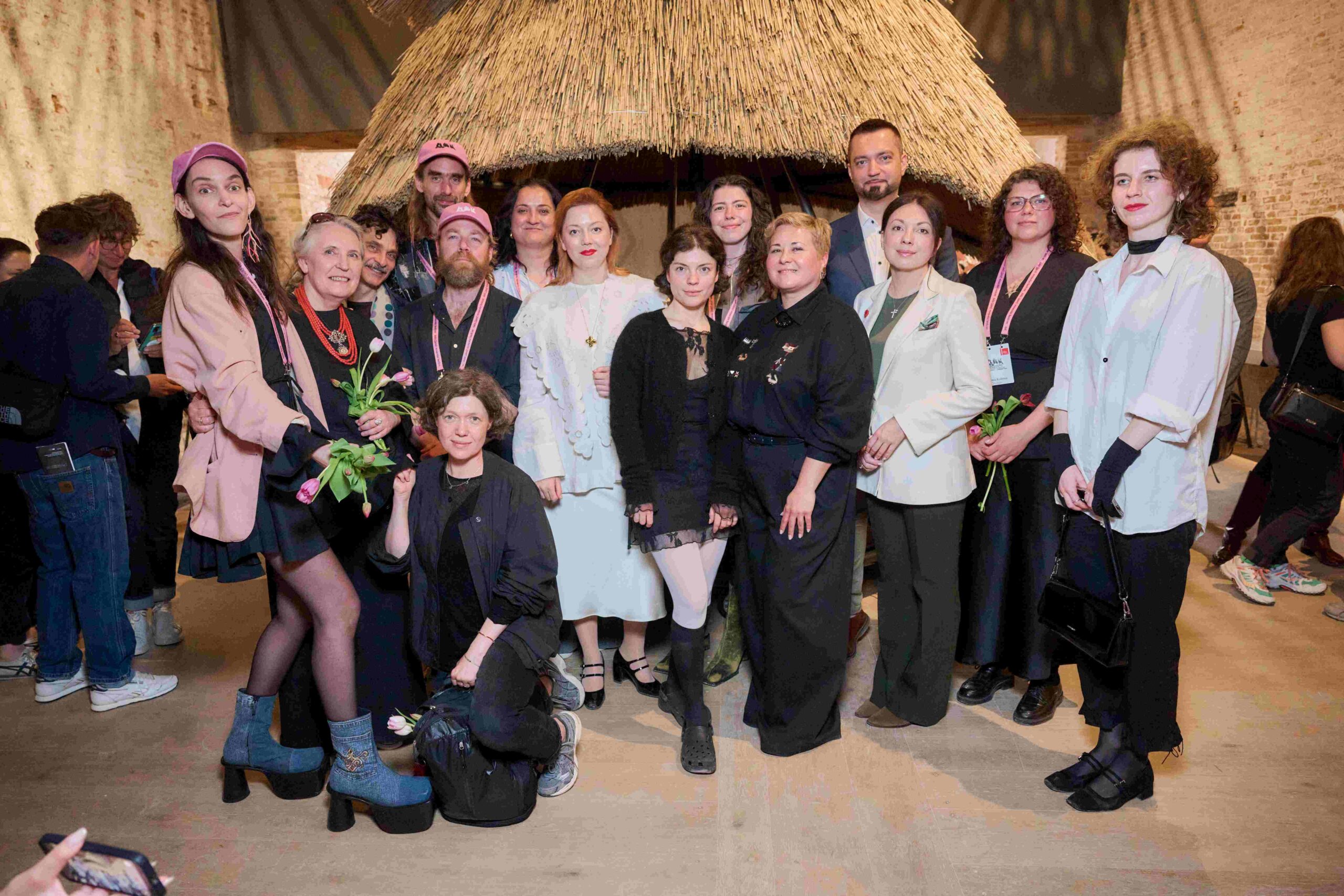
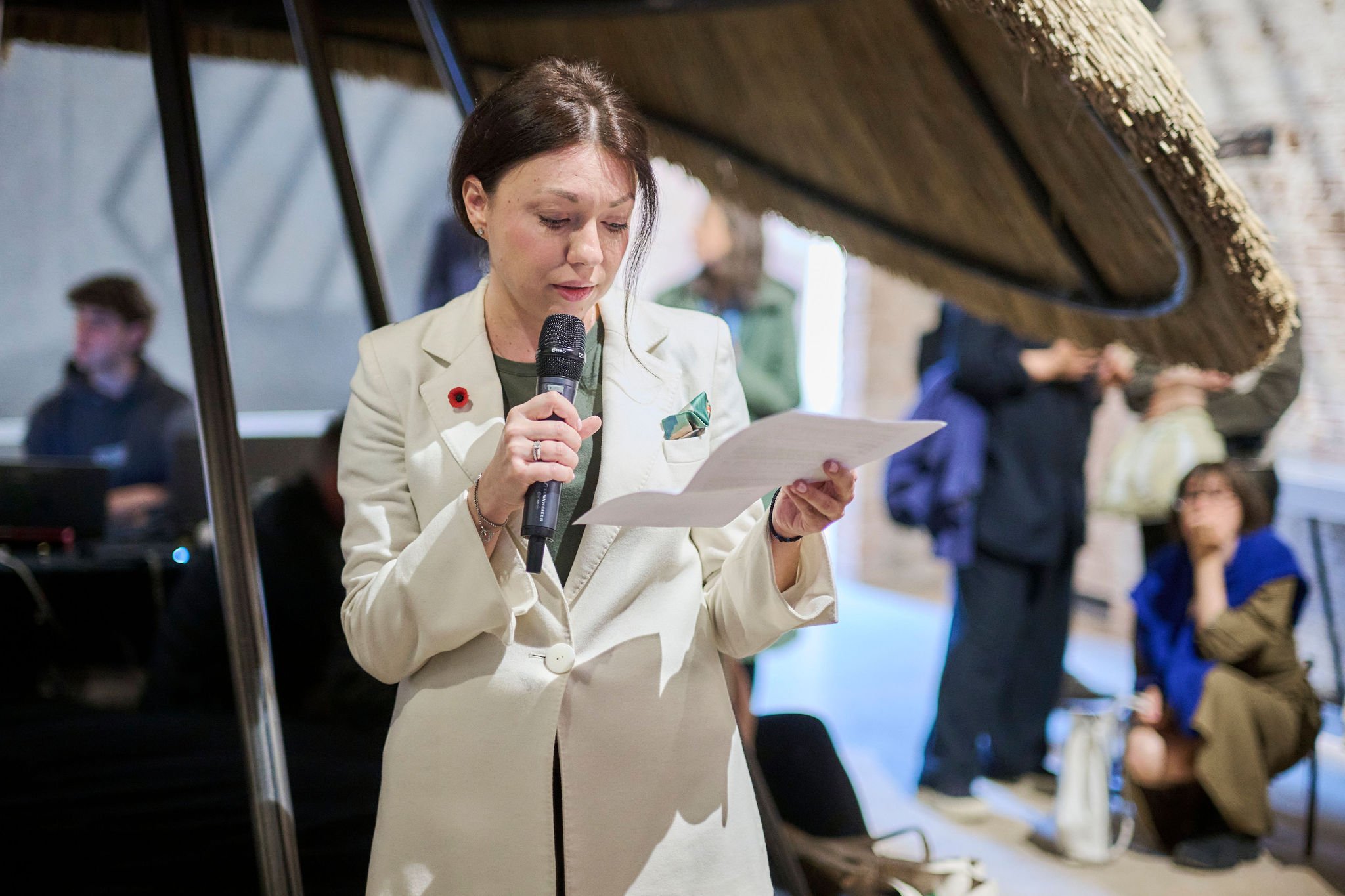
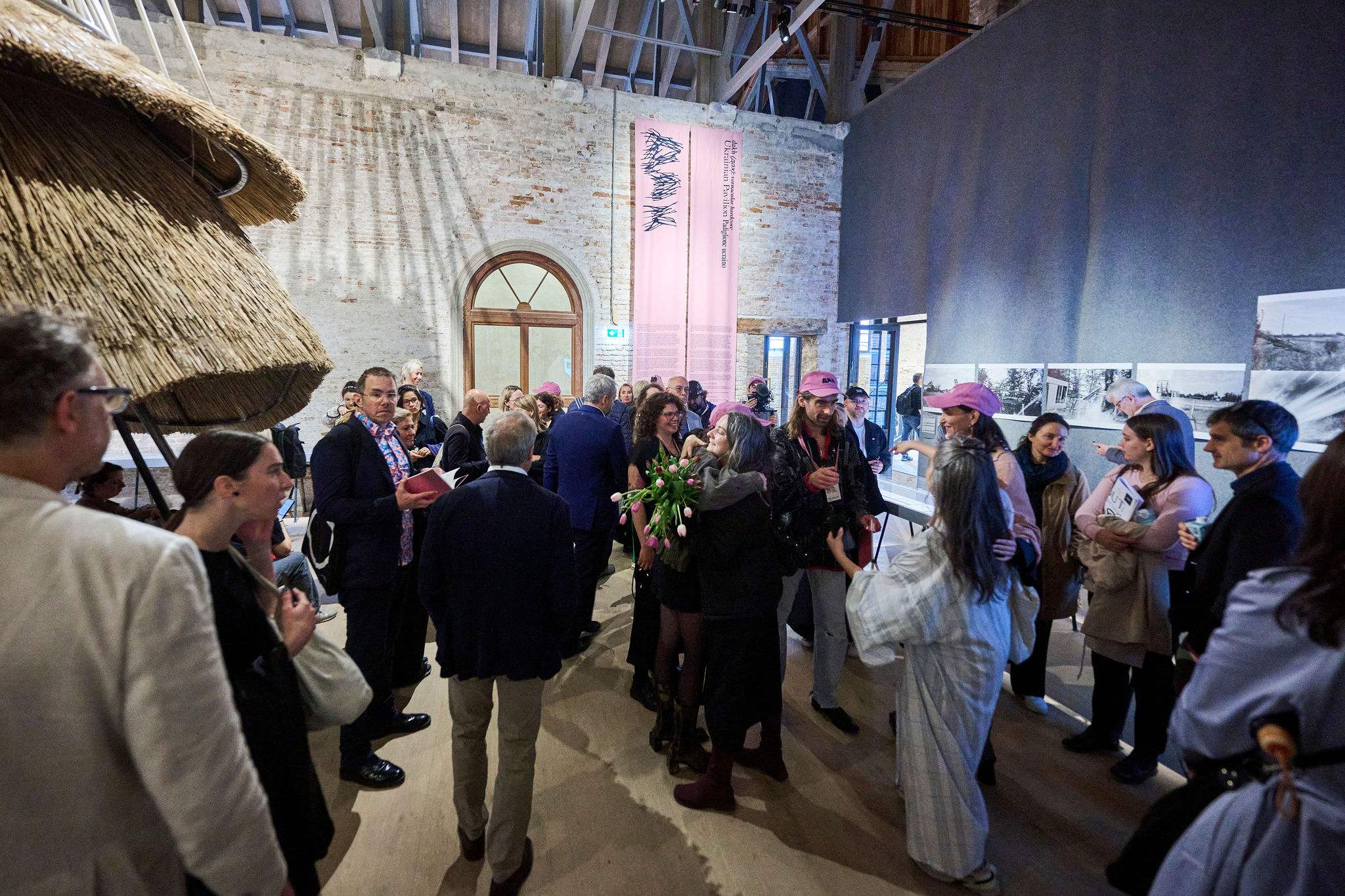
Photo: Valentyna Rostovikova, PRYZM photography
DAKH (ДАХ): Vernacular Hardcore
Date: 10 May — 23 November 2025
Venue: Arsenale, Sale d’Armi, building A, 1st floor
The Ukrainian Pavilion is commissioned by Tetyana Filevska, Creative Director of the Ukrainian Institute, together with co-commissioning institutions, the Ukrainian Institute and RIBBON International. The project is supported by the Ministry for Communities and Territories Development of Ukraine and the Ministry of Foreign Affairs of Ukraine.
Curators: Bogdana Kosmina, architect; Kateryna Rusetska; Michał Murawski
Architects & ethnographers: Oksana Kosmina, Tamara Kosmina
Producer: Ilona Demchenko
Project team: Yevgenia Belorusets (artist/consultant); DRONES FOR DRONES, a series of drone music compilations, curated by artist Clemens Poole for Kyivpastrans Records and released in collaboration with Fallout Noise volunteer collective; Vladyslav Sharapa (artist/consultant); Kseniia Kalmus (artist/consultant); Ihor Okuniev (artist/consultant); Ada Wordsworth (artist/consultant); Clemens Poole (sound curator) and Dmytro Vortman (cartographer)
For the next six years, the Ukrainian Institute will serve as the commissioner of the Ukrainian pavilion at the International Architecture Exhibition of La Biennale di Venezia, supported by the Ministry for Communities and Territories Development of Ukraine and the Ministry of Foreign Affairs of Ukraine.
Partners: Roberto Bianconi Atelieritaliano, Comune Di Venezia, Thetis, Scuola Grande di San Marco
RIBBON International is a platform supporting historic and contemporary Ukrainian arts and culture in the form of exhibitions, artist commissions, public programs and grants. RIBBON runs through Ukraine by way of its railway system and aims to provide support to the endangered legacies of Ukraine’s cultural and artistic heritage, as well as to artists, cultural producers, contemporary culture and institutions throughout Ukraine in their fight for cultural autonomy.
#DakhVernacularHardcore
#UkrainianPavilion
#BiennaleArchitettura2025
#IntelliGens
#RIBBONInternational