
Reading Guide to Ukrainian Literature by Andrii Portnov
A Guide to Ukrainian Classics
The Hidden Canon: Ukraine’s Literary Iconoclasts
10 Must-Read Books of Ukrainian Literature
recommended by Andrii Portnov
Reading Guide to Ukrainian Literature by Andrii Portnov
A Guide to Ukrainian Classics
This reading guide is part of a series of recommendations by leading literary scholars and Ukrainian studies experts. The project was launched several years ago to introduce foreign readers and professionals to key Ukrainian authors and their works. Historian Andrii Portnov’s list features ten books that open Ukrainian literature in all its diversity – from heroic epic and dramatic poem to intellectual novel and contemporary prose.
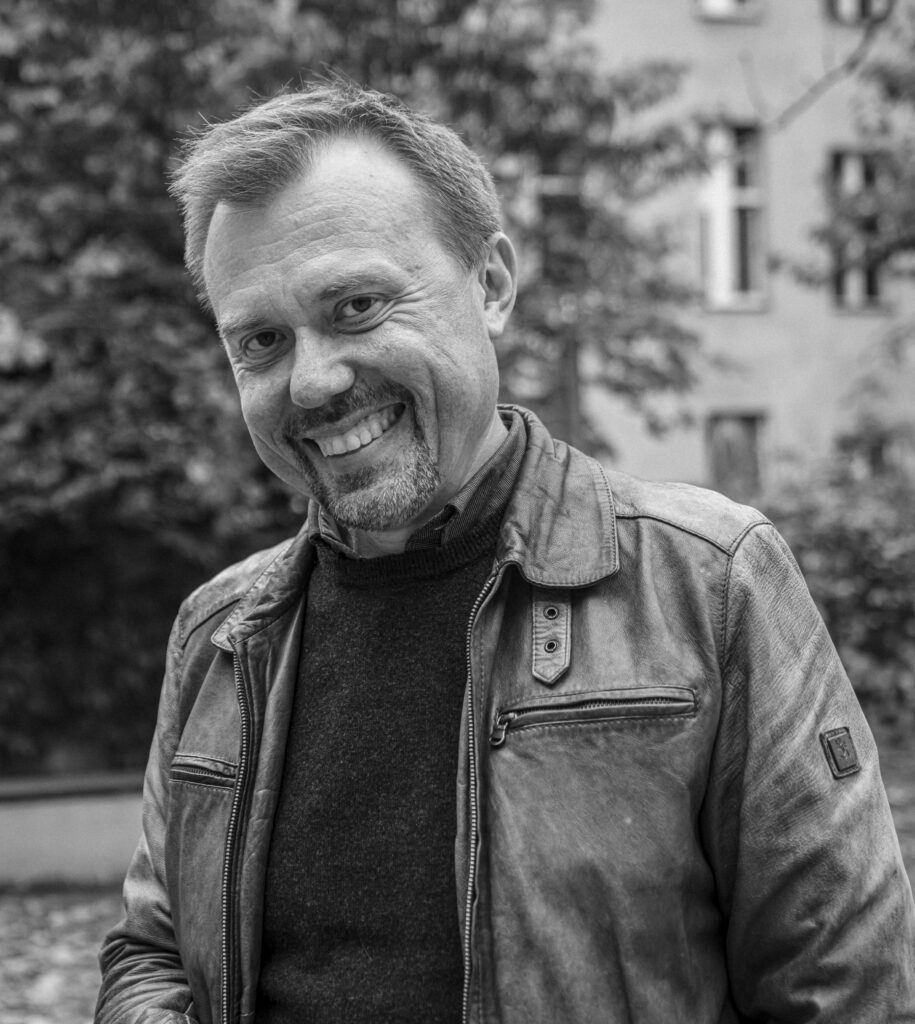
Andrii Portnov is a historian and researcher of the intellectual history of Central Europe and Ukrainian historiography, as well as of Ukrainian-Polish and Ukrainian-German cultural relations. He is the founding director of the PRISMA UKRAЇNA Research Network Eastern Europe in Berlin, a professor at the Pilecki Institute in Warsaw and the Ukrainian Free University in Munich, and an associate researcher at the Viadrina Center for Polish and Ukrainian Studies. He is a member of PEN Ukraine and the German-Ukrainian Society. He is the author of a biography of the city of Dnipro and the first German-language Ukraine-Studien. Einführung (Introduction to Ukrainian Studies). He is also the co-editor of Viktoria Kolosova’s Kyiv Diary 1940–1945, as well as the German anthology of Kyiv neoclassicists by Oswald Burghardt (Yurii Klen). Andrii Portnov is also the author of an intellectual biography of Omeljan Pritsak.
The list includes:
1. Unknown author
The Tale of Ihor’s Campaign
Genre: heroic epic
Year of publication: 1800
Language: Old Slavonic
Key words: Rus’, Polovtsians, Steppe, prince Ihor, Yaroslavna’s Lament
The text of The Tale of Ihor’s Campaign was published in 1800, based on a 16th-century manuscript that was supposedly destroyed in the Moscow fire during the city’s capture by Napoleon Bonaparte’s troops in 1812. Without direct access to the manuscript, researchers continue to debate the date of the work’s composition. The question of the authenticity of The Tale of Ihor’s Campaign has divided scholars into staunch sceptics and ardent defenders of the text’s antiquity. Regardless of whether the text originated in the late 12th century or was written in the late 18th century, it possesses exceptional poetic and oratorical qualities, placing it on a par with The Nibelungenlied and The Poems of Ossian by James Macpherson.
The Tale of Ihor’s Campaign recounts the 1185 military campaign launched by Ihor Svyatoslavych, Prince of Novhorod-Siverskyi, against the Polovtsian steppe nomads – a foray that ultimately proved unsuccessful for the Rus’ forces. The epic’s rich style contains distinct elements of the Ukrainian vernacular, as well as a notable array of Turkic loanwords.
Translation:
The Tale of Igor’s Campaign. Translated and published by Perun Mountain publishing house, 2023.
2. Hryhorii Skovoroda
Kharkiv Fables
Genre: fable
Year of publication: 1837
Language: Russian
Key words: an allegorical tale, Kharkiv, philosophy
Hryhorii Skovoroda, one of Ukraine’s most important thinkers and the last representative of the Ukrainian Baroque, lived in the 18th century, a time when Ukrainian lands were gradually being incorporated into the Russian Empire. Skovoroda chose the path of a wandering philosopher, renouncing positions and property. His reflections were reminiscent of Alexandrian philosophers from the decline of Rome – such as Philo, Plotinus, and Origen – as well as of German religious mystics. He believed that philosophers should avoid practical activities, renounce worldly concerns, and curb their ambitions. Skovoroda wrote songs, fables, treatises, and dialogues, retelling ancient stories in a biblical style. None of his works were published during his lifetime. His manuscripts appeared in print only after his death.
Kharkiv Fables (composed in Russian) were first published in 1837. In 1920, Hnat Khotkevych translated them into modern Ukrainian for the first time. Through the fable genre, Skovoroda illustrates his philosophical views and draws generously from the folk art of his native Slobozhanshchyna. Skovoroda’s thirty fables constitute a treasure trove of Ukrainian literature from the second half of the eighteenth century.
Translations:
Hryhorii Skovoroda. Werke. Translator: Roland Pietsch. Language: German. HARRASSOWITZ, 2026.
3. Panteleimon Kulish
Black Council
Genre: historical novel
Year of publication: 1857
Language: Ukrainian
Key words: Cossacks, landlords, peasants, Khmelnytsky Uprising, The Ruin
Panteleimon Kulish, the central figure of 19th-century Ukrainian intellectual history, was a prose writer, poet, translator, and historian. He spent his life searching for political convictions and aesthetic means, grounding his activities in a deep faith in the power of the written word and the importance of cultural work. His writings greatly influenced the development of the Ukrainian literary language and the understanding of Polish-Ukrainian relations. According to Viktor Petrov, a scholar of Kulish’s work, he was “a parliamentarian without a parliament, a leader without a party, a journalist without a magazine.” It was precisely this “tragic loner” – as George Shevelov defined him – who shaped the future development of Ukrainian culture through his writings.
Black Council, regarded as the first Ukrainian historical novel, was described by its author as a “chronicle in dramatic form.” The novel offers an artistic interpretation of the tragedy of Ukrainian history following the Bohdan Khmelnytsky revolution (1648–1657) – a period known as the Ruin. The title and text refer to a real historical event: the Sich Rada of 1663 in Nizhyn. Kulish’s text features both historical and fictional characters. The chronicle-novel is structured on the principle of antithesis, in which one scene’s conclusions contradict another. Overall, Kulish offers a broad and ambiguous reflection on social and national conflicts in Ukrainian history.
4. Ivan Franko
Crossroads
Genre: social novel
Year of publication: 1900
Language: Ukrainian
Key words: Eastern Galicia, the peasant question, Poland-Ukraine relations, Jewish question, women’s emancipation
Ivan Franko, the most prominent figure in Ukrainian culture in western Ukraine during the second half of the 19th century, was a writer, historian, folklorist, literary scholar, and linguist with an encyclopaedic education – he authored one of the first systematic histories of Ukrainian literature. Franko was one of the most prolific translators of world literature into Ukrainian, rendering works by Dante Alighieri, Miguel de Cervantes, and Johann Wolfgang von Goethe, as well as texts on history and philosophy. He also worked as a journalist and essayist, publishing widely in Ukrainian, Polish, and German. A politician as well, he was one of the founders of the Ruthenian-Ukrainian Radical Party in 1890. Arrested as a student for participating in a secret socialist group, he later published an intellectual critique of Marxism.
The novel follows Yevhenii Rafalovych, a young lawyer who opens a practice in a provincial East Galician town while working to promote education and political self-organization among the local peasants. It is a sweeping portrayal of Galician life – its economic problems, judicial corruption, and complex interethnic relations – interwoven with a love story. The protagonist has a chance encounter with a Polish woman he had loved during his student years, now the wife of a local official and domestic tyrant. Franko’s reflective prose touches on painful issues: the psychology of love, women’s emancipation, and the question of Jewish-Ukrainian relations. The text carries echoes of Franko’s own biography and is laced with mystical subtexts.
Translation:
5. Lesia Ukrainka
Cassandra
Genre: dramatic poem
Year of publication: 1908
Language: Ukrainian
Key words: Troy, Cassandra, Ellada, intuition, death, beauty, happiness
Larysa Kosach’s choice of the pen name “Ukrainka” clearly points to a conscious cultural and political decision. Firmly rooted in Ukrainian culture, Lesia Ukrainka was one of the writers who consistently expanded the thematic and substantive scope of Ukrainian literature. The central themes of her dramatic works and poetry are reinterpretations of world culture and its key narratives – ancient, biblical, and Persian among them. She frequently focuses on female figures, from Sappho and Cassandra to Mary Stewart and Iphigenia. Ukrainka’s texts are allegorical and layered, characterized by a tragic worldview and a painful contrast between spiritually strong individuals and the prevailing currents of their society. This reflects an autobiographical motif: Larysa Kosach never received the recognition her work deserved during her short life.
In Cassandra, Lesia Ukrainka offers a thoughtful reinterpretation of an ancient plot from Homer’s Iliad – Cassandra’s unheeded prophecies about the fall of Troy. The poem deepens themes of intuition, the search for truth, and the price paid for it, while also engaging with questions of beauty, peace, death, and happiness. True to her characteristic style, Ukrainka avoids directness, instead creatively combining elements of Impressionism and Symbolism. She moves with ease within the European cultural tradition, reinterpreting it entirely on her own terms.
Translations:
6. Mykhailo Kotsiubynsky
Shadows of Forgotten Ancestors
Genre: lyrical novel
Year of publication: 1912
Language: Ukrainian
Key words: the Carpathians, Hutsuls, folk art, magic
A master of psychological prose and impressionistic depiction, Kotsiubynsky brought the literary currents of Zola, Strindberg, Ibsen, and Maeterlinck into Ukrainian literature. In his short stories, he sought to recreate visual, auditory, and tactile impressions through rhythmic sentences that often resemble lines of prose poetry. His works are devoted to such themes as loneliness, reality, and illusion, while also engaging with the social movements of the early 20th century – as in Fata Morgana – and with Crimean Tatar life, as in Under the Minarets.
Drawing from folklore, Shadows of Forgotten Ancestors is a mystical love story of Ivan and Marichka, set against the backdrop of family feuds and the untamed Carpathian landscape. The narrative intertwines themes of tragic loss, unhappy marriage, and encounters with the spirit world. A rich reinterpretation of the mythological world of the Carpathians, the novel served as the basis for Serhii (Sergei) Parajanov’s 1964 film of the same name – one of the landmark works in the history of Ukrainian cinema.
Translations:
7. V. Domontovych
On Shaky Ground
Genre: intellectual novel
Year of publication: 1948
Language: Ukrainian
Key words: Dnipro, Karol Szymanowski, museum, new art, absolute truth, unfulfilled love, the limits of aesthetic seeing.
Viktor Petrov was an exceptionally versatile scholar and one of the most fascinating intellectual figures of 20th-century Ukraine – an archaeologist, ethnographer, linguist, and historian of literature and philosophy. In the late 1920s, he emerged as a writer under the pseudonym “V. Domontovych,” and his novels are considered exemplary works of intellectual urban prose, among the earliest fictionalized biographies in Ukrainian literature. From the mid-1930s, he collaborated with the Soviet secret services. In 1942, he crossed the front lines on their behalf and edited a literary and scholarly journal in Nazi-occupied territories. After World War II, he lectured and published within the Ukrainian émigré community in West Germany before returning to the USSR in 1949. From 1956 until his death, he worked at the Institute of Archaeology of the Academy of Sciences in Kyiv.
On Shaky Ground is a masterpiece of Ukrainian intellectual prose. Petrov began publishing it in 1942 in the journal he edited in Nazi-occupied Ukraine. The plot centres on a distinguished art historian’s journey to his hometown of Dnipropetrovsk – now Dnipro – to uncover the fate of a landmark from the early 20th century: the Varangian Church, designed by the fictitious architect Stepan Lynnyk. The novel is a survey of Ukrainian intellectual debates from the late 1920s and early 1930s, offering profound and searching reflections on the nature of art, modern love, music, museum practices, and survival in Soviet times. It combines an apologia for intellectual doubt with a penetrating analysis of the relationship between city and village, interwoven with the author’s memories of his own childhood and of Dnipro – a city that held deep personal significance for Petrov himself.
Translations:
8. Oles Honchar
The Cathedral
Genre: novel
Year of publication: 1968
Language: Ukrainian
Key words: Cossack Cathedral, historical memory, environmental protection
One of the most successful Ukrainian Soviet writers, Honchar began publishing in 1938 and gained wide recognition after World War II – a conflict he experienced as a soldier in the Red Army and later memorialised in a patriotic trilogy. In 1959, at the age of 41, he became head of the National Writers’ Union of Ukraine, a position he held until 1971, when he was removed due to the political turmoil surrounding his novel The Cathedral. In the late 1980s and early 1990s, Honchar emerged as one of the leaders of the Ukrainian national democratic movement. After his death, one of Kyiv’s central streets was named after him, and in 2008, Dnipro University – from which he had graduated in 1946 – was also named in his honour.
The Cathedral is set in Zachiplyanka, a steelmaking suburb of a metropolis clearly based on Honchar’s native Lomivka. The novel follows the residents’ efforts to preserve an ancient Cossack cathedral. The main protagonist, Mykola Bahlai, a student at the metallurgical institute, together with his beloved Yelka, opposes the plans of the careerist Komsomol member Volodka Loboda to demolish the cathedral and build a covered market in its place. Although the plot and characters of The Cathedral broadly correspond to the conventions of socialist realism – self-sacrifice, the leading role of the Communist Party, an inevitable happy ending – Honchar also engages with Stalinist repression, cultural heritage, and environmental protection. Considered the pinnacle of Ukrainian Soviet prose, the novel sparked a political scandal and became a seminal text for the generation of 1960s Ukrainian writers.
Translations:
9.Emma Andiievska
A Novel about a Good Person
Genre: mythological novel
Year of publication: 1973
Language: Ukrainian
Key words: Ukraine, DP camps, Good, Hell, Empire, (Non)existence
One of the most distinctive female authors of the postwar Ukrainian diaspora, Emma Andiievska was born in Donetsk. She left Ukraine with her parents during World War II and studied in Munich, where she made her literary debut as a poet. She lived in New York for a time in the late 1950s before eventually returning to Germany, where she worked in the Ukrainian section of Radio Liberty. Andiievska is known not only as a poet and prose writer but also as an original avant-garde painter, drawn to intuitive cognition, linguistic allusion, and the search for new forms of aesthetic expression across various art forms.
A Novel about a Good Person is a multi-layered, mystical narrative set in the Mittenwald camp for displaced persons in Bavaria. The protagonist is a camp thief who discovers the good within himself. The text does not, however, unfold through conventional plot-driven logic. It is instead a passionate work of mythmaking, marked by vivid anti-colonial connotations – Ukraine set in contrast to empire – and a distinctly experimental approach to prose: deliberately elongated sentences, a wealth of semantic analogies, and a ritualistic treatment of language.
Translation:
10. Yuri Andrukhovych
The Moscoviad
Genre: novel
Year of publication: 1993
Language: Ukrainian
Key words: Ukraine, Moscow, Soviet Union, colonialism
Yuri Andrukhovych is a writer, poet, essayist, and literary scholar – author of a doctoral dissertation on Bohdan-Ihor Antonych – as well as a translator of Shakespeare’s Hamlet, Kleist’s The Broken Jug, and Schulz’s The Street of Crocodiles. One of the most important contemporary Ukrainian authors, he was also one of the founders of the literary group Bu-Ba-Bu (Burlesque–Balagan–Buffoonery) in 1985, and the author of the short story collection On the Left, Where the Heart Is (1989) and several novels that significantly shaped the Ukrainian literary landscape of the 1990s and 2000s.
The novel depicts a single day in the life of Otto von F., a student at the Moscow Literary Institute – a character reflecting the author’s own experiences at the Gorky Literary Institute – set in the summer of 1991, on the eve of the collapse of the Soviet empire. Considered the epitome of Ukrainian postmodernism, the novel is both an engaging anti-colonial statement and a work in artistic dialogue with Venedikt Yerofeyev and Tadeusz Konwicki.
Selected translations:
Juri Andruchowytsch. Moscoviada. Translator: Sabine Stöhr. Language: German. Suhrkamp, 2016.
Jurij Andruchovytj. Moskoviaden. Translator: Sofia Uggla. Language: Swedish. Ersatz, 2023.
Yuri Andrujovich. Moscoviada. Translator: Oksana Gollyak. Language: Spanish. Acantilado, 2010.
Jurij Andruchowytsch. Moskoviáda. Language: Slovak. Kalligram, 2013.
Iuri Andruhovici. Moscoviada. Language: Romanian. Editura ALL, 2010.
იური ანდრუხოვიჩი. მოსკოვიადა. Translator: Raul Chilachava. Sulakauri, 2017.
יורי אנדרוחוביץ’. מוסקוביאדה. Translator: אנטון פפרני. Language: Hebrew. 9 Lives Press, 2020.