
Ukrainian Artists and Producers at the Sirenos Festival in Vilnius
The Ukrainian presence was organised by the Ukrainian Institute together with the festival and the Lithuanian Theatre Centre. It included the performance The Trap by Ukrainian choreographer, performer, and dance curator Rita Lira and a professional programme for young performing arts producers.
Since its founding in 2004, the Sirenos Festival has been a key event in Lithuania’s performing arts. The festival has two parts: showcases of Lithuanian productions for international producers and theatre festival programmers, and an international platform presenting productions from other countries. In 2026, Sirenos is united by the theme “Theatre as Escape.” The event is held with the support of municipal and state institutions: the Vilnius City Council and the Lithuanian Culture Council.
“We live in times when wars, disinformation, conspiracy theories, and a ceaseless stream of bad news have become part of everyday life. When reality becomes apocalyptically unbearable, many of us seek refuge in art. Theatre is unique in that we experience it together, searching collectively for like-minded people and for worlds we can escape to for an hour or two, returning, perhaps, somewhat changed,” says Kristė Agota Savė, Sirenos creative director.
“But the festival will end, so will the bliss, and the most important question when escaping towards or from sounds like this: what will you bring to the other end — how will the time at the paradise change you? When sitting in the dark of the theatre, what do you teach the body? A sitting position, an observational position — what is their afterlife in community service?” reflects Asia Pavlenko, programme manager for Performing Arts, in a text written at the festival’s invitation, ” A paradise picture of escape and all the things you bring from it.”
Full version of the text “A paradise picture of escape and all the things you bring from it“
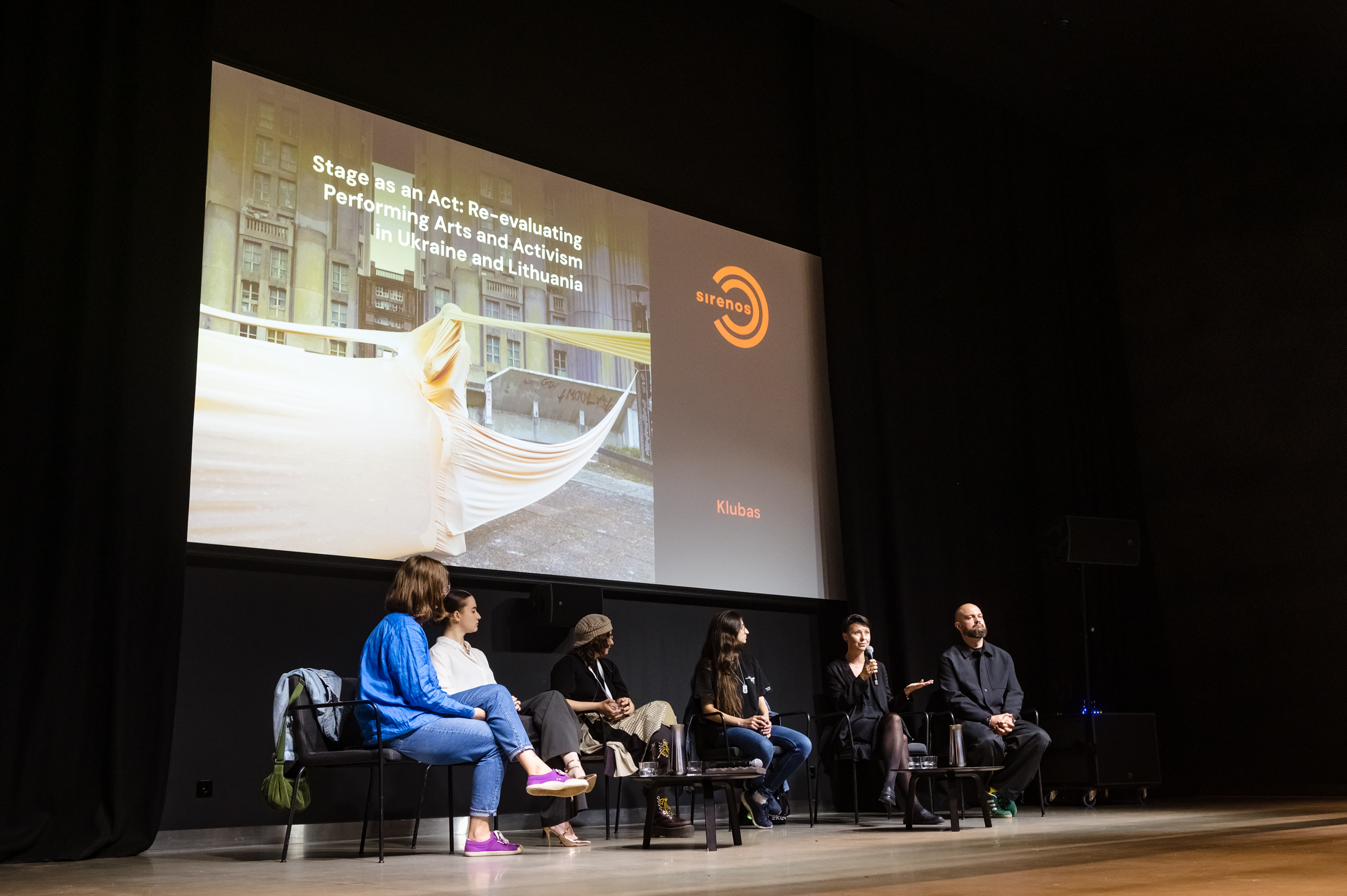
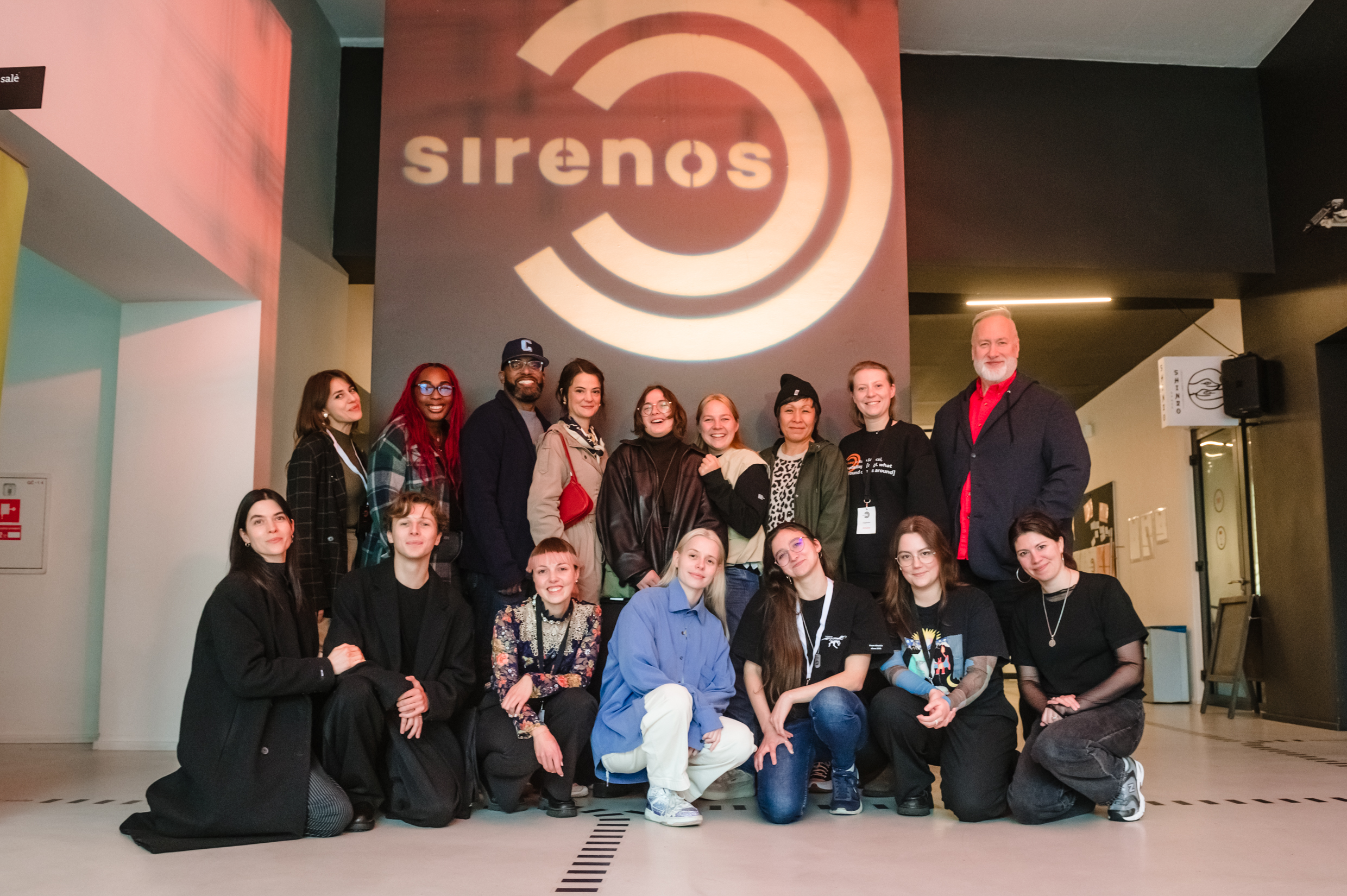
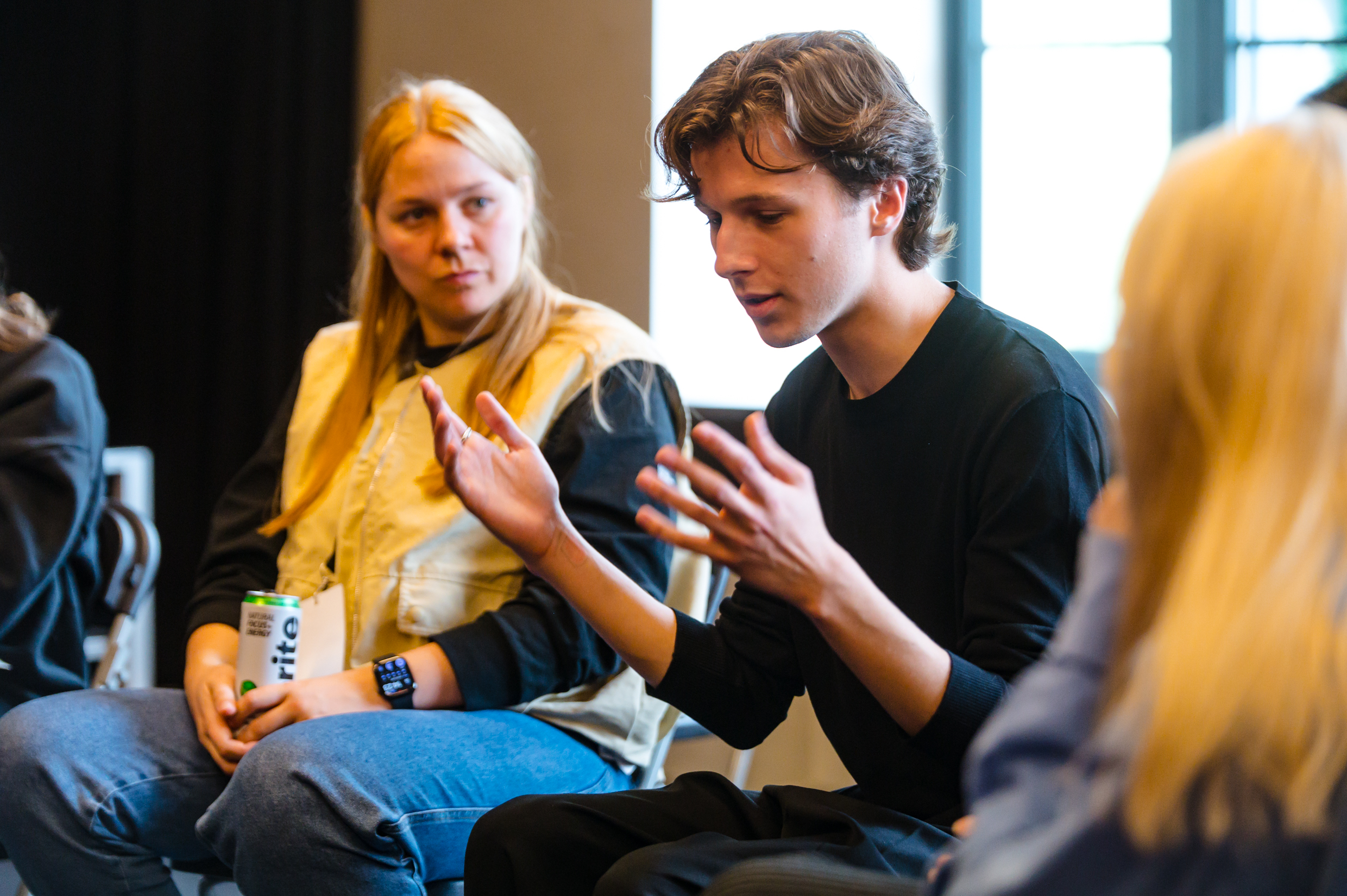
Photo: Dainius Putinas
Performance of The Trap by Rita Lira
The Trap opened the festival’s international programme outdoors, next to the Mo muziejus. In her work, Rita Lira combines contemporary dance, performance, visual art, and work with documents, exploring themes of mental traps, cyclicality, and the bodily experience of war and forced displacement.
Created with the support of the Cité Internationale des Arts and La Briqueterie CDCN, The Trap explores the psychological and emotional traps people face in times of crisis. The performer’s costume, a cocoon-like “second skin” from which long strips of fabric emerge, becomes entwined with surrounding objects, embodying a state of physical and psychological confinement.
After the show, a discussion was held on the intersection of performing arts and activism. Audience members said that the anxiety embodied in the costume and in the attempt to break free of it resonated with their personal experience and with the political context of Lithuania. It also matched their sense of the hardships Ukraine is living through amid the full-scale war.
Special programme for performing arts producers
During the festival, as part of the professional programme developed by the Ukrainian Institute, Sirenos and Lithuanian Theatre Center, four producers and managers from the state and independent institutions — Olesia Zakharova, Pavlo Koval, Mariia Levchenko, and Diana Tsyba — developed the skills needed for international cooperation.
More about the participants:
Olesia Zakharova is a cultural manager and actress from Kharkiv, Project Manager and Partnerships Manager at the alternative theatre Nafta. One of her main areas of focus is developing the theatre as a stable, multi-layered institution that successfully combines the creation of high-quality theatre productions, an educational platform for emerging local artists, the representation of Kharkiv, and the use of theatre as a tool of cultural diplomacy both in Ukraine and abroad.
Pavlo Koval is a producer and director based in Kyiv and the founder of Bentegy Theatre, an independent company working in physical, documentary and site-specific performance. His productions include Between the World and the Soul (2026), a Suzuki-method solo piece on the poet Vasyl Stus, and The Speech (2025). He has worked on international productions with La MaMa ETC and CultureHub (New York) and is currently developing Under the Uniform, a Ukraine–Kosovo project on LGBTQ+ veterans. A recipient of the ITI Academy Week 2026 scholarship.
Mariia Levchenko is an artist and theatre producer working in theatre, interdisciplinary practice, and socially engaged themes, exploring memory, identity, the impact of war, and the potential of art as a tool for dialogue. During the full-scale invasion, her work has focused on internally displaced children and women, for whom theatre has become a means of adapting to new realities and finding new meaning. Her recent projects include Stickers, Manivtsi, the site-specific performance Intermezzo, Train: The Path to Oneself, and Cassandra.
Diana Tsyba is the Executive Director of KЇ Platforma and KЇ FEST, an independent cultural platform and international theatre. Her practice sits at the intersection of cultural management, theatre, dance, and design. She is currently focused on developing international cultural collaborations, creating educational programmes for arts professionals, and producing cultural events.
The programme included:
- workshops on pitching projects and developing production strategies for distributing performing arts work, as well as mapping international performing arts festivals: their operating models and priorities;
- a conversation with the UK producer and curator Tom Forster about the Edinburgh Festival Fringe ecosystem: what a creative team should know to present work at the festival successfully and receive offers for its further development;
- a meeting with The Drama League, one of the key theatre associations in the USA, where they discussed the performing arts industries in the US and Ukraine, the main challenges, and formats of cooperation;
- networking with Lithuanian professionals and international festival guests;
- getting to know the festival team and visiting local institutions to see how funding and strategic planning are organised in the performing arts.
This format is part of the Ukrainian Institute’s initiatives for developing professionals in the performing arts. In 2026, these also included the Transmission Impossible residency together with the Avignon Festival and a hands-on immersion in the UK market at the Edinburgh Festival Fringe.
Participants' comments
Diana Tsyba:
A programme like this quickly expands your base of warm contacts through live interaction with professionals from other countries in an informal setting. It’s a chance to understand the local cultural and industry context and to see where future collaborations might arise. But it’s important to be genuinely interested in the people you’re talking to in the moment. If that interest isn’t there, it’s not worth wasting your time.
I definitely sharpened my skill at presenting myself and my work quickly and clearly. It was also valuable to better understand how different institutions work and how they shape their programmes and strategies.
In the future, we plan to invite international professionals and landmark works by artists to a festival in Ukraine, look for opportunities to tour Ukrainian productions, and develop educational projects for exchanging experience.
Mariia Levchenko:
The opportunity from the Ukrainian Institute to attend the Sirenos festival is the best thing that has happened to me this year. The international performing arts industry is a wonderful, living ecosystem where practitioners from different cities, countries, and continents hear one another, adopt effective case studies, and operate within new management systems.
For our domestic sector, it is extremely important to look wider and deeper than what we have and produce at the moment.
The introductions and workshops organised for us radically changed my view of the performing arts sector. Over this week, we turned dreams about the future into real opportunities, and we are already in negotiations with several theatre producers.
Pavlo Koval:
A programme like this is not just a chance to broaden your own horizons and cultural exchange within the events of the programme, but also a great springboard for networking. While still in Vilnius, I began negotiations about joint projects with local Lithuanian institutions. As a result, we are already writing a series of grant applications for distributing Ukrainian productions and other projects between Lithuania and Ukraine in 2027. These working connections are exactly why one should apply to programmes like this, and I am very grateful to the Ukrainian Institute for this opportunity.
Olesia Zakharova:
We received a rare opportunity to develop relevant hard and soft skills in a very specific, narrowly focused area of work. I will take away much broader knowledge of the system of European theatre festivals and their individual internal structures, as well as some advice on building a good life for a production after its premiere. We are already working on developing a European touring circuit in 2027 for one of the productions of Kharkiv’s alternative theatre “Nafta” (including negotiations with partners I had the pleasure of meeting during the programme). We are also building out a further strategy for involving the international professional community in educational initiatives within Ukraine.