

Lysiak-Rudnytsky Ukrainian Studies Programme

The Second 2026 Open Call is now closed.

Please follow our updates for information about the 2027 Open Calls.

The Lysiak-Rudnytsky Ukrainian Studies Programme is a programme to support projects in Ukrainian studies for research, educational, cultural institutions, and analytical centres abroad.

The Programme is open for applications from research, educational and cultural institutions, as well as think tanks outside Ukraine, seeking support for projects in the field of Ukrainian studies.

The Programme aim

The Programme aims to generate empirically grounded knowledge about Ukraine; to develop critical analytical tools for examining Ukraine’s past and present; to advance innovative approaches and the strategic visions of the Ukrainian Institute in implementing Crimean Tatar studies within Ukrainian Studies; and to ensure the presence of Ukrainian Studies within international scholarly discourse.

In the long-term perspective, LRP aims to integrate knowledge on Ukrainian and Crimean Tatar languages, literature, history, political science, sociology, and other relevant fields into university curricula and extend its reach to experts, policymakers, and media around the world. LRP will also facilitate academic exchanges and contribute to increasing the number of publications in Ukrainian and Crimean studies.

Programme Details

Projects to be completed within:

10 months

Grants:

up to $15,000

To provide continuous support for Ukrainian studies, the programme will hold two open calls this year. 

The Programme is implemented by the Ukrainian Institute in cooperation with the Cultural Diplomacy Foundation, with financial support from the International Renaissance Foundation and Mnozhyna Foundation 

Partners of the 2026-2027 programme

Who can apply?

The programme is open to foreign universities, educational and cultural institutions, think tanks, and individual researchers.

Co-financing of up to 30% of total project costs and collaboration with a Ukrainian partner institution will be considered advantageous.

Disclaimer

The Organization does not provide funding to or cooperate with projects whose final beneficiaries are citizens of the Russian Federation, the Republic of Belarus, or individuals and entities affiliated with aggressor states or sanctioned subjects.

Applicants must ensure that no direct or indirect benefit is provided to such persons or entities. Violation of this requirement constitutes grounds for rejection or termination of the grant agreement.

Eligible Project Formats

This year, the Programme will support the following projects that pursue the goals to:  

  • Develop and implement university courses (including MOOCs), with priority on undergraduate level and open/general courses; 
  • Organize research visits, field trips, and summer schools focusing Ukraine and, when circumstances allow, in Ukraine; 
  • Organize international and interdisciplinary scholarly conferences on Ukraine;
  • Conduct and publish research on LRP priority topics for the given year/period;
  • Translate specialized academic literature and archival materials from Ukrainian into other languages. 

2026 Competition Priority Topics

Decolonial and post-imperial Ukrainian Studies
Focused on the critical analysis of historical, cultural, linguistic, and political narratives about Ukraine and Crimea in European and global academic contexts.

Contemporary Ukraine (since 1991)
Research on processes of state-building, democratic transformations, multiculturalism, memory politics, and social and cultural change since the restoration of Ukraine’s independence.

Studies of the experience of war as a socio-cultural and historical phenomenon in Ukraine
With a focus on security studies and international relations, military anthropology, studies of combat and wartime experience on the front line and in the rear, occupation, mobilization, societal and cultural resistance, memory, and resilience in both historical and contemporary contexts.

Interdisciplinary Ukrainian and Crimean Tatar Studies
Aimed at developing innovative methodologies, strengthening international academic cooperation, and integrating these fields into global university programs.

Research in the field of Digital Humanities
Intended to engage new audiences and transform formats for representing Ukraine in the digital space.

If you have any questions regarding this programme, please write us at [email protected] 

Guidelines for Grant Budgeting

Expenses that can be included in the estimate:  

  • costs of translation from Ukrainian into a foreign language;   
  • services for writing scientific, analytical or journalistic articles;  
  • services for communication support of the event in social and print media;   
  • costs for book design;   
  • costs for the services of an editor and/or proofreader of the text in a foreign language;  
  • costs for oral (simultaneous) translation into a foreign language; – costs for printing and distribution abroad;   
  • costs for organizing a conference, round table or public lecture;   
  • costs for paying for the services of invited lecturers;   
  • costs for the production and design of films and videos, animated films, photo advertising materials and computer graphics;  
  • services for the development, supply and testing of software;   

Expenses that cannot be included in the estimate:   

– fees, awards, royalties;   

– license fees;   

– expenses for preparing documents for the competition;   

– expenses aimed at making a profit;   

– accreditation, membership fees;  

– payment for goods, works and services that were/are financed from other sources before or after signing the contract. 

If you have any questions regarding this programme, please write us at [email protected] 

Application Deadlines

3rd Call Submission Deadline: August 6, 2025.  

Applications not selected in the first and second rounds may be revised and resubmitted for later calls.  

How to apply?

To participate in the Programme, please fill out a google form, upload charter and registration documents, and project budget (using the sample from the table file).   

Please note that while the projects may be conducted in different languages, the application form must be completed and submitted in English. 

If you have any questions, feel free to contact us at [email protected] — we’ll be happy to assist you! 

Winners of the 2nd open call 2026-2027

Applicant: KOLEGIUM EUROPY WSCHODNIEJ im. Jana Nowaka-Jeziorańskiego 

An international research group will work on completing the reconstruction of the lost Ukrainian text of Mike Johansen’s novel Yugurtha. The Story of Old Kharkiv, whose publication was prohibited by the Stalinist regime and whose Ukrainian original was lost after the author’s execution. The project includes two translation seminars, preparation of five language versions of the novel for publication, six public meetings, and an online exhibition presenting the history of the novel, Kharkiv, and the author. A further outcome will be the development of a comprehensive translation methodology applicable to other Ukrainian works from the same period, while the project as a whole aims to renew the presence of Ukrainian literary heritage in the European cultural space. 

Applicant: Ópera en Movimiento, A.C.  

This international academic and public programme at the National Autonomous University of Mexico will introduce Mexican and Latin American audiences to contemporary Ukrainian scholarship on colonialism, imperial violence, decolonization, cultural resistance, epistemic justice, and knowledge production. The programme will include six public lectures, a methodological workshop for graduate students and faculty members, and a concluding roundtable involving Ukrainian and Mexico-based scholars, with the events livestreamed and subsequently published as recordings. The project aims to strengthen the presence of Ukrainian decolonial scholarship in Latin America, develop cooperation with UNAM and other Mexican academic and cultural institutions, and establish a basis for sustained Ukraine–Latin America academic dialogue. 

Applicant: Hungarian Heritage House 

In partnership with the Mykola Lysenko Lviv National Music Academy, Crimean Tatar musician and researcher Cemil Karikov, Polyphony Project Ltd., and the American Association of Crimean Turks, the project will create the first international multilingual open-access Teaching Toolkit dedicated to Crimean Tatar musical heritage. The project will include an intensive three-day audiovisual recording session in Lviv, followed by the production of professional educational videos, university teaching modules, lesson plans, methodological guidelines, a teacher’s guide, a glossary, and supporting learning materials. The completed Teaching Toolkit will be published as Open Educational Resources on the Folk_ME platform and disseminated internationally through partner networks and a dedicated online webinar. 

Applicant: Ankara University, Division of Ukrainian Language and Literature, Department of Slavic Languages and Literatures, Faculty of Languages and History-Geography. 

The project aims to ensure the full delivery of the first year of the newly established Ukrainian Language and Literature programme at Ankara University. It will develop bilingual Ukrainian-Turkish teaching materials for first-year subjects, engage invited lecturers from Ukrainian universities, and organize teaching and public activities. An important component will be a decolonial approach to teaching Ukrainian history, culture, and society, including the integration of Crimea and the Crimean Tatars into the curriculum. The materials will be published open-access, creating a sustainable teaching base for the development of Ukrainian Studies in Türkiye and across the wider Turkic-speaking academic environment. 

Applicant: Durham University 

The project aims to create an international interdisciplinary platform bringing together scholars from Ukraine, the United Kingdom, Europe, and North America, including Ukrainian scholars currently based at academic institutions abroad because of the war. Through hybrid workshops and in-person meetings, the project seeks to broaden the methodological and geographical scope of Ukrainian Studies by introducing transdisciplinary approaches and focusing on regional and local experiences alongside major historical centres. The project will result in the publication of the Subjective Atlas of Ukraine and the creation of an accompanying website, both intended for use in teaching and university curricula. 

Applicant: PWSFTviT w Łodzi 

The project explores everyday life and unofficial contacts between Ukraine and Poland from the 1970s to the 1990s through amateur home movies and the technological transition from 8mm film to VHS, with consultative, research, and institutional support from the Center for Urban History in Lviv. Using visual anthropology and associative editing, the team will work with private cross-border audiovisual materials to examine shared social experiences, differences in everyday life, and the development of unofficial Polish-Ukrainian contacts from late socialism through the 1990s. 

The project “Crimean Tatar Studies in Dialogue: Indigeneity, Memory, and Justice” as part of “Recentring the Humanities: Ukraine and the World” (CIUS-50 Symposium), Edmonton, 28–30 October 2026 Toggle Content

Applicant: The Governors of the University of Alberta, Canadian Institute of Ukrainian Studies (CIUS) 

The project will support the participation of Crimean Tatar scholars and public figures in the international symposium Recentring the Humanities: Ukraine and the World, where Crimean Tatar perspectives will be represented in panels on First Peoples and indigeneity in Ukraine, justice, and faith and society. Following the symposium, a dedicated workshop in collaboration with the Faculty of Native Studies at the University of Alberta will bring Crimean Tatar scholars into direct dialogue with First Nations scholarship and communities in Canada and will include a discussion on establishing an international Crimean Tatar Indigenous Studies Network. Participants’ presentations are planned for publication in a special issue of Forum for Ukrainian Studies, while session recordings will be made available online to support further collaboration in Crimean Tatar and Indigenous Studies. 

Winners of the 1st open call 2026-2027

Applicant: Ukrainian Association of South Africa (UAZA) 

In partnership with the Institute of Justice and Reconciliation, the University of Pretoria, the University of Cape Town, and with support from the Konrad Adenauer Stiftung, the Ukrainian Association of South Africa will organize a three-day Winter School on Ukraine and Africa’s Strategic Future in the Western Cape. The programme will bring together South African academics, researchers, and postgraduate students to deepen their understanding of Ukraine’s history, culture, and contemporary challenges through workshops, presentations, and discussions with Ukrainian and South African scholars. The project will also support the participation of three Ukrainian academics, facilitate a seminar on integrating Ukraine-related content into existing university curricula, and strengthen institutional cooperation between Ukrainian and South African universities. The initiative aims to contribute to the development of Ukrainian studies in South Africa by fostering academic networks, collaborative teaching, and long-term scholarly partnerships. 

Applicant: Institut für Slavistik und Osteuropastudien (ISOS), University of Zurich 

In cooperation with Odesa I. I. Mechnikov National University and Taras Shevchenko National University of Kyiv, the University of Zurich will implement a public teaching module and research workshop dedicated to Ukraine’s role in contemporary global politics. The project combines a four-week university course, co-taught by Swiss and Ukrainian scholars, with a research workshop examining wartime communication, public diplomacy, and AI-assisted research methods. It will also enhance the Digital Ukrainian Media Archive (DUMA) through the development of an AI-supported interface for teaching and research purposes. By integrating Ukrainian expertise into political science curricula and connecting teaching with digital research infrastructure, the project seeks to strengthen international academic cooperation and expand the presence of Ukraine-focused content within higher education. 

Applicant: Laboratory of Ukrainian Identity, University of Warsaw 

In partnership with the University of Tübingen, University College London, and Ivan Franko National University of Lviv, the Laboratory of Ukrainian Identity at the University of Warsaw will establish a Transnational Urban Humanities Lab dedicated to the study of Ukrainian cities in literature and culture. The project will convene two international workshops in Poland and Germany, bringing together scholars from Ukraine, Poland, Germany, and the United Kingdom to explore urban memory, displacement, resilience, and future imaginaries in wartime Ukraine. Through interdisciplinary collaboration across literary studies, cultural anthropology, sociology, and linguistics, participants will develop new methodological approaches to studying urban narratives and prepare a peer-reviewed English-language publication, Writing the City: Narratives of Memory, Displacement, and Urban Futures in Ukraine. The initiative seeks to strengthen the international visibility of Ukrainian urban experiences and contribute new perspectives to global discussions on memory, resilience, and reconstruction. 

Applicant: Borshch of Art, Inc. 

In partnership with the Shevchenko Scientific Society in New York, Borshch of Art will curate a public exhibition dedicated to Ukrainian American artists represented in the Society’s permanent collection. The exhibition will feature works by artists including Jacques Hnizdovsky, Mykola Butovych, Edward Kozak, Volodymyr Lassovsky, and others, highlighting the contributions of Ukrainian American cultural heritage to the artistic landscape of the United States. Alongside the exhibition, the project will include a curatorial open call, public discussions, and educational programming designed to foster dialogue and cultural exchange among diverse audiences. Open to the public free of charge, the exhibition will contribute to broader awareness of Ukrainian artistic traditions and support engagement with Ukrainian American cultural history through accessible public programming and scholarly interpretation. 

Applicant: Centre for European and Eurasian Studies (CEES), Munk School of Global Affairs & Public Policy, University of Toronto 

In partnership with St. Volodymyr Institute and the Holodomor Research and Education Consortium, the University of Toronto will host a residency and dialogue programme bringing two Ukrainian scholars, creative practitioners, or public intellectuals to Canada. Through public lectures, workshops, classroom engagement, and collaborative discussions, the project will examine the role of memory, civic resilience, and cultural renewal in contemporary Ukraine. Particular attention will be given to decolonial approaches to memory and the experiences of Ukrainian and Crimean Tatar communities. By connecting scholars, students, policymakers, and diaspora organizations, the initiative aims to strengthen transnational academic and civic networks while generating new perspectives on civil society, postwar recovery, and public engagement. Project outcomes will include public events, recorded interviews, and educational resources that support the international development of Ukrainian studies. 

Winners of the 3rd call 2025-2026

Applicant: Shevchenko Scientific Society in the US (Shevchenko Scientific SocietyInc.)  

In partnership with the National University of Kyiv-Mohyla Academy, the Institute of Documentation and Exchange, and Academic Studies Press, the Shevchenko Scientific Society in the US will publish the first comprehensive academic handbook of Ukrainian literature, spanning more than a thousand years of history – from the 11th century to the present. The eleven chronological sections will cover prose, poetry, drama, essays, and religious literature. The thematic focus will highlight the relationship between literature and the public sphere, postcolonial contexts (including diaspora literature and works of Indigenous peoples), trauma and memory, citizenship, and digital culture. The project aims to create an authoritative resource for Ukrainian literary studies worldwide, dismantling imperial myths and offering an authentic, local perspective. The printed and open-access online edition will serve as a valuable tool for curriculum developers, professors, and students of Ukrainian literature around the globe. 

Applicant: Helios Kirjastus OÜ  

Helios Kirjastu , in partnership with Estonian Cultural Capital, will release the Estonian translation of the graphic novel A Brief History of a Long War of Ukraine with russia by Mariam Naiem, Yuliya Vus, and IvaKypibyda. The publication, presented in an engaging format, tells the story of the Russian-Ukrainian war, making it accessible to a broad European audience and highlighting historical parallels between Estonia and Ukraine. The project’s promotion will include collaboration with the Estonian Children’s Literature Centre, the Estonian History Teachers’ Association, as well as an active presence in the media and bookstores. The book is envisioned as a tool of cultural diplomacy, preserving historical memory through a contemporary medium at the intersection of art and popular culture. 

Applicant: Institute for Caucasica-, Tatarica– and Turkestan Studies / ICATAT 

The Institute for CaucasicaTatarica, and Turkestan Studies, in collaboration with the NGO “ALEM,” the Museum of the History of Ukraine, and the Society for threatened People, will document, digitize, and provide public access to Crimean Tatar artifacts and works from a wide range of German collections. Many of these artifacts have never been publicly displayed, including some that are up to 700 years old. The collections include objects made from diverse materials across centuries, copies of the Quran, literary works, paintings, diplomatic correspondence from the Crimean Khanate, musical instruments, and sound recordings dating back to 1916. The project aims to encourage research on Crimean Tatar cultural artifacts even during the ongoing occupation of Crimea, when such studies have become significantly more difficult, and to establish a strong example of global cultural representation of the Crimean Tatars as a people under threat. 

The project will present a series of eight online webinars introducing participants to remote access opportunities for documents that have become nearly impossible to consult in person since 2022. During the sessions, leading Ukrainian archivists will provide comprehensive guidance on procedures, challenges, and prospects for using web-based archives. The project responds to the growing academic interest in Ukraine by offering essential resources to Ukrainian studies researchers and interested students worldwide. 

Applicant: The University of Chicago  

The University of Chicago, in collaboration with the Dnipro Center for Contemporary Culture and The Experimental Station (Chicago), will present a transdisciplinary workshop dedicated to the networks and infrastructures that shape Ukraine, particularly through the lenses of environmental studies, critical infrastructure, energy, science, and technology. The workshop draws parallels between two post-industrial megapolises, both founded in the 1780s within imperial contexts near large bodies of water, highlighting the various ways imperialism influenced knowledge production in each city. The project will also feature a community kitchen event and a panel discussion with workshop speakers in Dnipro. Its aim is to increase global interest in Ukrainian studies and to foster new academic and artistic connections between the two cities. 

Applicant: History Meeting House (Dom Spotkań z Historią), publisher of Dwutygodnik magazine

In partnership with “Korydor” magazine, Ukrainian. Media, and the Ukrainian House Foundation, the History Meeting House will publish 15 essays by Ukrainian researchers, cultural experts, and journalists, as well as prominent Polish writers, on the topics of decolonization of Ukrainian culture and cultural resilience during the war. The essays will be published bilingually in the respected Polish magazine Dwutygodnik and on the “Korydor” platform. A discussion in Poland will also bring together Ukrainian and Polish authors. The project aims to highlight specific Ukrainian cases of decolonization – including transformations in art, historical narratives, and cultural identity – while also drawing comparisons with Poland and other European countries. 

Winners of the 2nd call 2025-2026

Applicant: Latvian Centre for Contemporary Art

The research project by the Latvian Centre for Contemporary Art, carried out in collaboration with the NGO After Silence and artists Lia and Andrii Dostliev, aims to develop a shared historical perspective on the experience of Soviet and Russian imperial oppression. The project explores how art both reproduces and challenges colonial narratives, interpreting transnational traumas—such as forced displacement, cultural assimilation, and military aggression—in the search for decolonial solidarity. 

The programme will include research seminars at the Estonian and Latvian Academies of Arts (Tallinn and Riga) and will culminate in the publication of essays based on the project’s theoretical investigations and public discussions. 

 “Communicating Difficult Pasts: Towards Decolonial Solidarity” establishes new epistemological connections between the countries involved, bringing previously obscured colonial narratives to light for a broad international audience. 

Applicant: Crimean House Foundation (Fundacja Krymski Dom)

This project aims to establish the first academic programme in Crimean Tatar studies in Poland, based at the University of Warsaw. Its goal is to address the absence of systematic academic engagement with the history, culture, language, and current situation of the Crimean Tatars within European higher education.

The initiative builds on the experience of the Crimean Studies Centre at the National University of Kyiv-Mohyla Academy and is implemented in partnership with the Institute of Intercultural Studies of Central and Eastern Europe at the University of Warsaw.

As part of the project, interdisciplinary teaching modules, a methodological framework, and an institutional model will be developed to ensure the programme’s long-term sustainability. Special emphasis will be placed on a decolonial approach and close collaboration with Crimean Tatar scholars and community representatives.

By filling a significant gap in the academic landscape, this initiative will also contribute to a more inclusive and equitable understanding of Eastern Europe.

Winners of the 1st call 2025-2026

The translation of Tamara Gundorova’s “Paris or Patsykiv?…”, proposed by Academic Studies Press, will introduce a Ukraine-centered decolonial discourse to the global English-speaking academic audience. This work explores the history of Ukrainian cultural identity transformations, offering a fresh perspective on themes such as orientalism and occidentalism, provincialization, and Europeanization. “Paris or Patsykiv?…” challenges conventional ideas about centres and peripheries, positioning Ukraine within the global decolonial dialogue. The translation will give international scholars and researchers access to one of Ukraine’s leading cultural theories, providing insights into the country’s historical and contemporary place within the “West-East” dichotomy. Following publication, a presentation of the book is planned in London.   

In collaboration with Academic Studies Press and the Institute for Human Sciences (Vienna), the Ukrainian Institute London will publish a special issue of the London Ukrainian Review focused on culture as security. London Ukrainian Review is an open-access journal that offers a Ukrainian perspective on global issues and an international view of Ukrainian history and contemporary matters. The journal has been included in both European and American academic programs. The fall issue, set to be released this year, will feature insights from creative practitioners, academics, and policymakers on how cultural knowledge influences political and military decision-making, as well as (inter)national security. It will explore how Russia’s colonial cultural policies enabled its villainous war against Ukraine and how culture became a tool of Ukrainian resistance. The “Culture as Security” issue will include translations of poetic works and address topics like the infiltration of Russian soft power into the global creative economy, the use of artistic reflections as resistance, decolonizing knowledge about Ukraine, Ukrainian multiculturalism and the preservation of Crimean Tatar heritage, as well as feminist approaches to security. The issue will help solidify Ukraine’s role in global discussions on decolonization, multiculturalism, feminism, and resistance, conceptualizing Ukrainian culture as one that is fighting for survival against authoritarianism and imperialism. 

The University of São Paulo, in collaboration with Kyiv-Mohyla Academy, will organize live conferences in both Ukraine and Brazil, alongside a series of eight online lectures by scholars from both countries as part of the “Bridging Ukraine and Latin America…” project. This initiative will offer a platform for valuable exchange and comparison of experiences related to colonial and authoritarian legacies in Ukraine and Latin America. “Bridging Ukraine and Latin America…” will present Latin American perspectives on Ukraine to the Ukrainian academic community and spread Ukrainian decolonial academic texts in Brazil and Latin America, amplifying Ukrainian voices in the region’s academic discourse, countering disinformation about Ukraine in Brazil, and fostering deeper mutual understanding and academic cooperation between the two countries. 

Partners of the 2025-2026 programme

About Lysiak-Rudnytsky

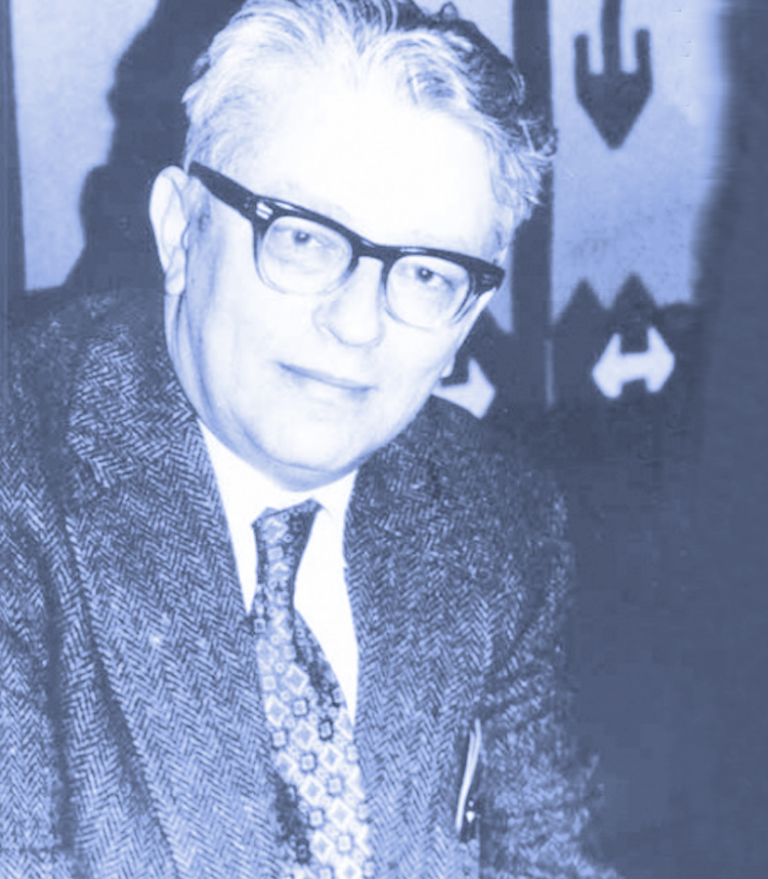
The Programme is named after Ivan Lysiak-Rudnytsky (1919-1984), an American/Canadian historian of Ukrainian descent. A public intellectual, Lysiak-Rudnytsky made a significant contribution to the development of Ukrainian Studies abroad. As early as the 1950s, he pointed to the shortcomings of the Russian-centric approach to Eastern European history that prevailed in North America. Emphasizing the multiethnic nature of the Russian Empire and the Soviet Union, he singled out Ukrainian context and the Ukrainian perspective regarding the events of the past. His numerous essays on Ukrainian political and intellectual history have had a significant impact on the formation of modern Ukrainian historiography.

Winners 2023-2024

Project description: 
National UniversityKyiv-Mohyla Academyand Kyiv-Mohyla Business School, in cooperation with the University of Massachusetts in Boston, held a series of public discussionsDocumenting Wartime: Literature, Memories and Testimonies.” During the event, prominent Ukrainian and foreign literary experts, journalists, writers and human rights defenders discussed the key themes of the literary and documentary text as evidence of the realities of the Russian-Ukrainian war since 2014, especially in its full-scale phase.

>>

More: 

Photo: Facebook National University “Kyiv-Mohyla Academy”

Project description: 
Kyiv National University in partnership with Viadrina European University implemented the projectUkrainian Studies. The Genesis of Ukraine in Literature: History, Philosophy, Culture“. As part of the project, a training course with online lectures and thematic workshops was launched. During the course, students had the opportunity to learn individual elements of the Ukrainian language and to translate into English texts on the history of Ukraine, culture, literature and philosophy, written by modern Ukrainian academics in various fields. 

>>

More:

The university website

Project description: 

Scientist and popularizer of astronomy Lyudmila Marchenko recorded the podcastUkrainian Sky“, which aims to expand the knowledge of the European and global audience about Ukraine, in particular about folk astronomy and its contribution to the European and world astronomical culture and science. The presentation of the podcast took place on May 23 during theTreasures of the Starry Skyfestival on the occasion of the International Day of Astronomy. 

>>

More:

Зображення: сторінка проєкту у Facebook

The project “In the Thunderstorm of War” is an online collection of interviews with professional historians, anthropologists, and ethnologists who found themselves at the center of current historical events. In the new reality, these people put on military uniforms or joined the ranks of volunteers, finding themselves under occupation, and gaining experience of survival under enemy fire. Interviews are available in English, French, and German.  

>>

More:

Зображення: https://uamoderna.com/in-the-thunderstorm-of-war/

The series of postcards and lectures “Messages from Ukraine,” created by the public organization “Union of NML Supportersintroduces viewers to the most iconic, canonical works from the museum’s collection, providing insight into the historical context of their creation. Distributing postcards with QR codes linking to lectures in European museums and cultural institutions will help raise international awareness of Ukrainian cultural heritage and its value, which is particularly important in the current cultural war context. 

>>

More: Youtube page

“The Language of Witnesses: Kharkiv during World War II” is a collection of documentary materials about the fate of the residents of the Ukrainian city of Kharkiv during the Second World War. The platform’s core is the documentary four-part miniseries “About Kharkiv and Themselves: Experiences and Fates of a Great City in the Oral Narratives of Its Residents.” The project aims to counter Russian imperialist propaganda and restore historical justice regarding German responsibility for the crimes of national socialism in Ukraine. “The Language of Witnesses” platform not only helps reflect on the past but also brings it into the modern context of the ongoing war with Russia, preparing the foundation for international discussions and cooperation. The website is available in both Ukrainian and German. 

>>

More: the project’s website


The English translation of the study “Crimean Tatars under Occupation and Full-Scale War (2014–2023)” by FOP Kyslyi is the first English-language work comprehensively examining the situation of Crimean Tatars after the occupation of Crimea in 2014. Given the limited access to Crimea since 2014, this publication will play a crucial role in facilitating data exchange among researchers on the contemporary issues concerning Crimean Tatars. The work fills a critical gap in the social sciences and humanities regarding the Crimean Tatars as an indigenous people of Ukraine who have suffered from repression, forced migration, and compulsory mobilization by Russia. The research presentation to an international academic audience created a platform for global dialogue raising the profile of Crimean Tatars in the international academic community. 

Winners 2023-2024

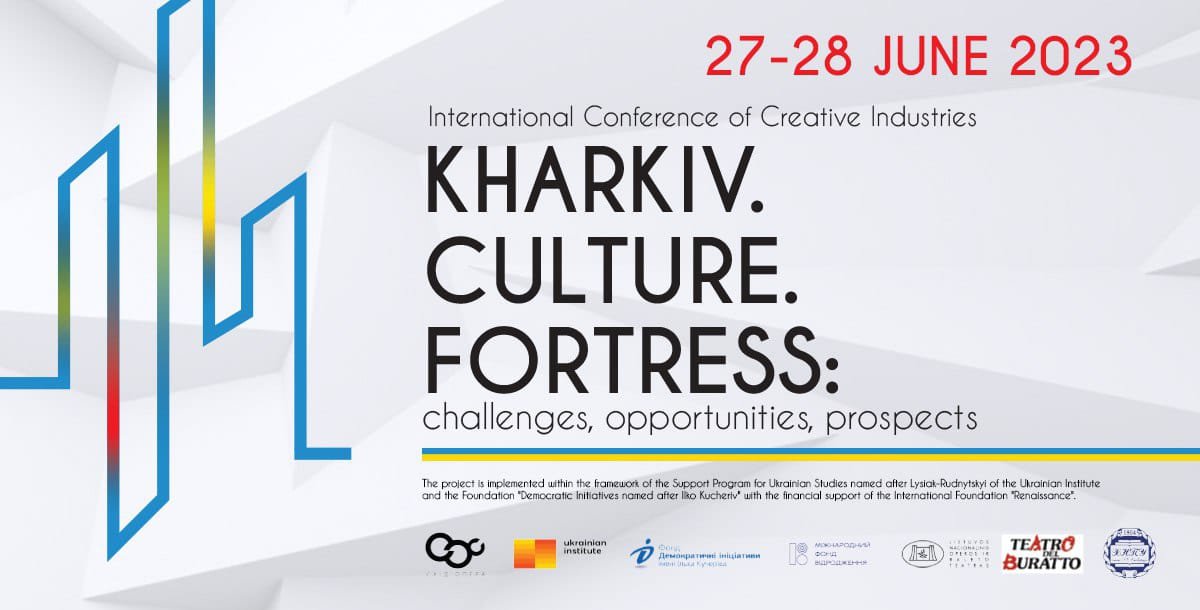
The conference organized by the Kharkiv National Academic Theater of Opera and Ballet named after M.V. Lysenko, lasted two days in June 2023. Within the conference, 3 sections were held, which included 12 panel discussions, on the following topics: narratives of Ukrainian culture, new business models of creative industries, the connection between business and culture, the integration of Ukrainian culture into European culture context and the removal of Russian influences. 37 speakers from 4 countries (Ukraine, Lithuania, Italy, Slovakia) and representatives of the Kharkiv cultural community not only discussed the prospects and formats of the development of cultural projects, but also established communication and found points of cooperation in the future. 

>>

More:
Facebook

To mark the 10th anniversary of the start of the Euromaidan (November 2023), the Center for Urban History of East Central Europe initiated and implemented a project to make more than 100 interviews with participants of the Revolution of Dignity available to English-speaking researchers, teachers, and students. Translated into English and thematically organised, the interviews provide insight into how people experienced it, what it meant to be a protester on the Maidan, and what beliefs they shared and sought to achieve on the streets of Kyiv, Kharkiv and Lviv. The translation of the Intimate Chronologies of the Euromaidan database amplifies the voices of Ukrainian citizens, shows their agency and subjectivity, and thus counteracts the narratives of dehumanising propaganda. These materials in English add visibility to Ukraine within global narratives about democratic processes, civil society development, the value of human rights, and resistance to authoritarianism. 

>>

More:

Project page on the website of the Center for Urban History of Central-Eastern Europe 

Photo: Image: Oleksandr Zakletskyi https://www.lvivcenter.org/updates/voices-of-euromaidan/

UCulture, a platform for discovering Ukrainian culture, was initiated by Larysa Dovha, Doctor of Philosophy, Professor at the Department of Cultural Studies at the National University of Kyiv-Mohyla Academy.  

UCulture is a web space that contains more than 100 lectures, interviews, and textual materials created by professional cultural researchers from various fields – archaeologists, economists, historians, cultural studies experts, artists, critics, and other specialists. Academic lectures and conversations reflect the latest views of leading Ukrainian and international researchers in the Humanities and Social Sciences and allow us to truly understand Ukrainian culture in the European cultural and educational context. 

>>

More:
Project website 

Winners 2020

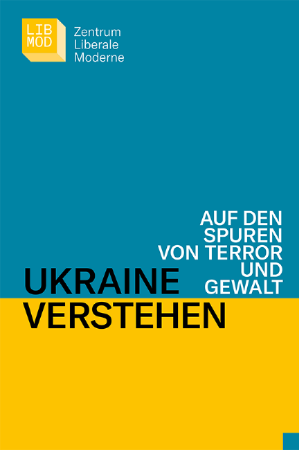
A collection of sketches in GermanUnderstanding Ukraine. Traces of Terror and Violencewas published in November 2020 by the Zentrum Liberale Moderne analytical center in cooperation with the Ukrainian Institute. The collection highlights the complex history of Ukraine: the Holodomor, Russia’s occupation of Crimea, the Holocaust, Chernobyl and other topicsdescribed in the essays of Timothy Snyder, Anne Applebaum, Serhiy Plokhi, Volodymyr Yermolenko and other experts from Ukraine. 

More:

Youtube presentation of the project

File of the collection of sketches in German

The project “10 things everyone should know about Ukrainewas prepared by the Ukrainian Institute of London in cooperation with leading experts in the field of Ukrainian studies. The videos tell about notable people, historical and cultural events of Ukraine in the 19th and 20th centuries. Leading scientists invite us to rethink known and common phenomena for Ukraine in local and global contexts, to understand their role in the formation of modern Ukraine and their place in European and world cultural trends. 

More:

Project page on the website of the Ukrainian Institute

A series of videos on Youtube

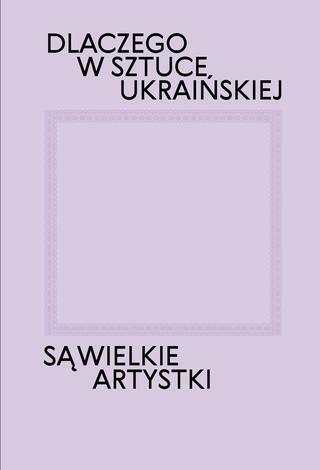
In 2020, the Katarzyna Kozyra Foundation translated and promoted the bookDlaczego w sztuce ukraińskiej wielkie artystki (Why there are great women artists in Ukrainian art)” in Poland. The book examines the presence of women in Ukrainian art of the 20th and 21st centuries: difficulties on the way to their self-realization, the influence of the environment on their creativity, and describes their creative heritage. In 2024, the discussion of the book accompanied the exhibition of Maria Prymachenko’s worksTygrys w ogrodziein Warsaw. 

More:

Project page on the website of the Katazhina Kozyra Foundation

The Center for Urban History implemented the projectUrban 20th Century: Spatial, Visual, Local and Daily” – an educational platform that provide an English-speaking audience with access to resources on the history and culture of Ukraine. Among the materials that can be found on the platform are materials from the urban history of Lviv and Kyiv, which will be useful when preparing humanitarian programs and courses. 

More:

Project “Urban XX Century” on the website of the Center for Urban History

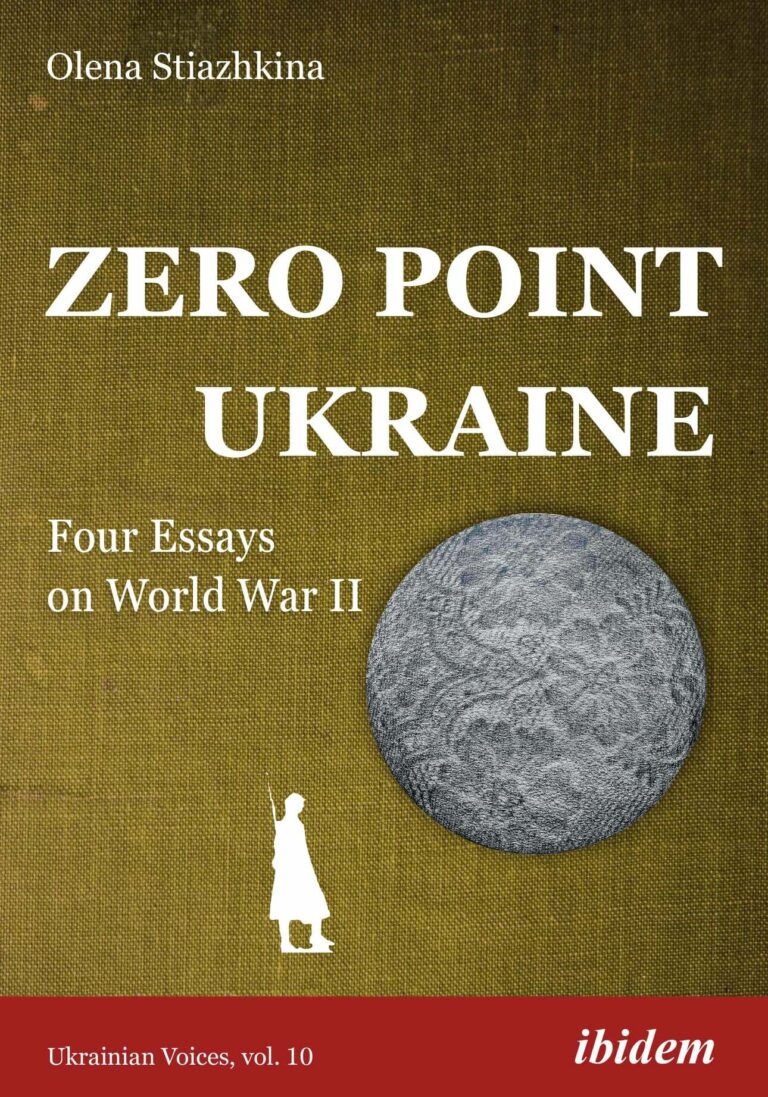
In the academic publishing house ibidem-Verlag, in the seriesUkrainian Voices“, the English-language version of the bookRockade: four essays on the history of the Second World Warby the historian and writer Olena Styazhkina was published. The book consists of four essays that reveal the Ukrainian experience of the Second World War and also include the events in Ukraine in the European context. The author analyzes the issues of research methodology, approaches to understanding the events of the war, the chronology and terminology we use when talking about the Second World War, the mobilization and militarization of Soviet society, the experience of occupation regimes on Ukrainian lands.

More:

The book on the publisher’s website 

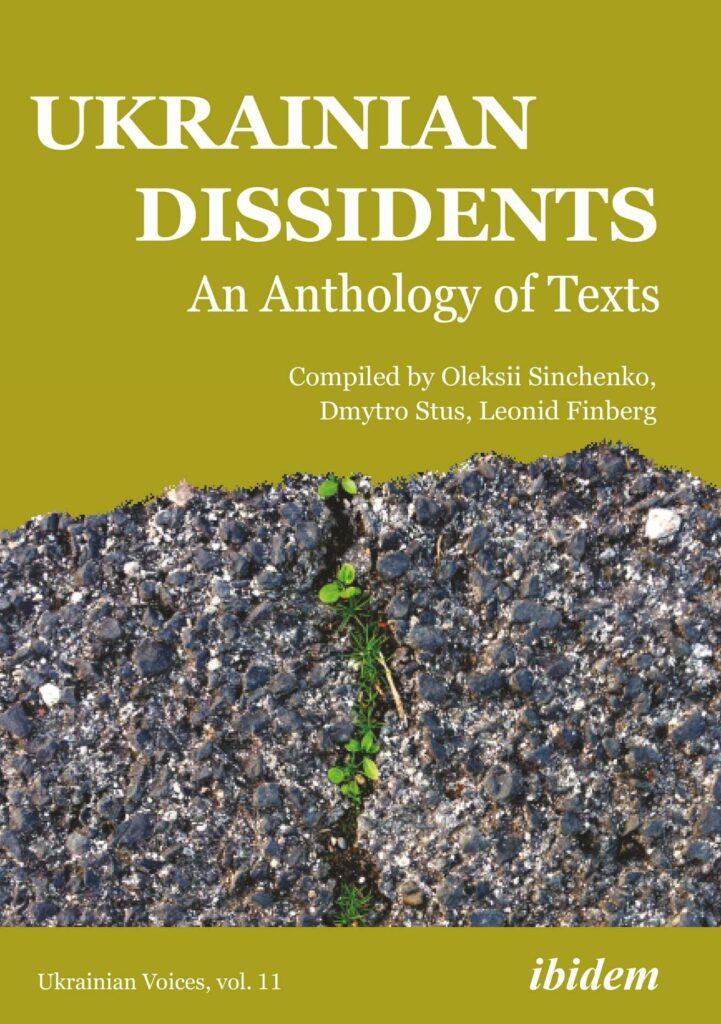
The academic publishing house ibidem-Verlag published the English-language version of the bookDissidents. Anthology of texts“, compiled by Oleksiy Sinchenko, Leonid Fiberg, Dmytro Stus and Myroslav Marynovich. The book reveals the complexity of the dissident movement in Soviet Ukraine through journalistic works, poetry, public speeches, court speeches, memories of being in prisons, mental hospitals and camps, written in the 1960s-1980s. 

More:

The book on the publisher’s website

The Institute of Ukrainian Studies of the University of Alberta in cooperation with the magazine and publishing houseKrytykadeveloped the web resourceForum on Race and Postcolonialism in Ukraine and North America“. The platform hosts texts on the topic of postcolonialism, cultural and national diversity of Ukraine for both academic and general audiences. 

More:

Race and Postcolonialism in Ukraine and North America | Krytyka

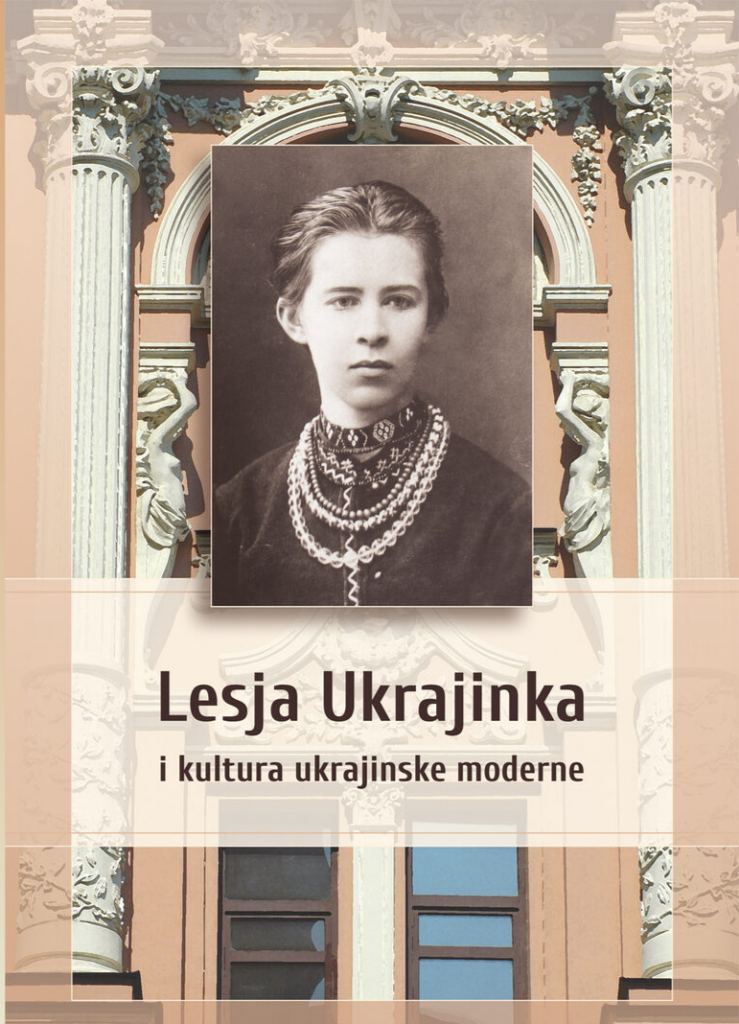
The SocietyCroatian-Ukrainian Cooperation” (HORUS) at the Department of Ukrainian Language and Literature of the Faculty of Philosophy of the University of Zagreb together with the Museum of Prominent Figures of Ukrainian Culture (Kyiv) and Ukrainian students of the University of Zagreb compiled the book Lesja Ukrajinka i ukrajinska moderna (Lesya Ukrainka and Ukrainian Modern)“. The book consists of popular science texts by Ukrainian researchers about Lesya Ukrainka, as well as Lesya Ukrainka’s dramaBoyarynia“, which was translated into Croatian. 

Ukraine ver­ste­hen. Auf den Spuren von Terror und Gewalt
Publishing project on the culture of  remembrance in Ukraine (Germany)

A collection of essays from leading foreign and Ukrainian historians, intellectuals, publicists about the important events in the history of Ukraine, in particularly, in the common history of Ukraine and Germany. The publication is distributed in print and will soon be publicly available. The project was implemented by the Zentrum Liberale Moderne think tank devoted to the democracy, individual liberty and cosmopolitanism, including defence and renewal of open society. The Centre also deals with international, socio-political, historical and cultural issues.

Preview here.
Watch the presentation.

The “10 Things Everyone Should Know About Ukraine” project tells about prominent Ukrainians, historical and cultural events that reshaped Ukraine`s history of the 19th – 21st century. Leading scholars invite us to rethink familiar phenomena in local and global contexts, and to understand their role in the formation of modern Ukraine, their place in European and world cultural context. The series was prepared by the Ukrainian Institute of London in collaboration with leading scholars in the field of Ukrainian Studies. The archival footage used in the films is provided by the Central State Cinema, Photo and Audio Archives of Ukraine n.a. Pshenichny.
Dlaczego w sztuce ukraińskiej są wielkie artystki
The Polish Edition of the Book  “Dlaczego w sztuce ukraińskiej są wielkie artystki (Why there are Great Female Artists in Ukrainian Art)” (Poland)
The book “Why there are Great Female Artists in Ukrainian Art” explores the presence of women in Ukrainian art of the 20th and 21st century. The authors of the book discussed the experience of Ukrainian female artists, revealing the difficulties of their self-realisation, the impact of the surroundings on their work and career, talked about their artistic heritage. The book was first published in Ukraine in 2019, and in 2020 was translated into Polish as part of the Lysiak-Rudnytsky Ukrainian Studies Programme. It was presented to the Polish artistic community in November 2020. The translation and promotion of the book in Poland were initiated by the Katarzyna Kozyra Foundation which supports women in art, researches and promotes the artistic heritage of female artists, with a special focus on the art of Central and Eastern Europe.
Urban XX Century: spatial, visual, local and everydaу
Multimedia project (Austria-Ukraine)
 
The Urban XX Century: Spatial, Visual, Local and Everyday project will provide the English-speaking audience with the access to resources on the history and culture of Ukraine. The project aims to discuss the global processes of the 20th century from the perspective of personal experiences and local contexts. The educational platform, which contains materials on the urban history of Ukraine of the 20th century, primarily Lviv and Kyiv, will help to develop new humanitarian programs and courses, and complement existing ones, including in foreign universities with the Ukrainian perspective. The project is implemented by the Lviv office of the Center for Urban History of Central and Eastern Europe. Dr. Harald Private Foundation.
Zero Point Ukraine: Four Essays on World War II
English Publication of Olena  Stiazhkina’s Book (Germany)
The translation and publication of the book Zero Point Ukraine: Four Essays on World War II in English almost coincided with its original publication in Ukrainian in 2020. In the four essays Ukrainian historian and writer Olena Stiazhkina reveals Ukrainian experience of the Second World War, as well as presents events in Ukraine in the European context. The author analysed the research methodology, approaches to understanding of war events, the terms used when talking about World War II, the mobilization and militarization of Soviet society, the features of occupation regimes on Ukrainian territories. The English translation of Zero Point Ukraine: Four Essays on World War II was published by the international academic publishing house ibidem-Verlag in the Ukrainian Voices series. The series aims to introduce Western audience to Ukrainian explorations and interpretations of historic and current events. Within the framework of the Programme, 20 copies of the book were distributed among 20 libraries and universities in Germany.
Ukrainian Dissidents: An Anthology of Texts
English Publication of the Book 
(Germany)
The book Dissidents. An Anthology of Texts, compiled by Oleksiy Sinchenko, Leonid Fiberg, Dmytro Stus, and Myroslav Marynovych, reveals the complexity of the dissident movement in Soviet Ukraine. The book includes articles, poetry, public addresses, court speeches, memoirs about being in prisons, mental hospitals and camps, written in the 1960s and 1980s. These texts reveal the phenomenon of dissidence, moral and aesthetic beliefs of their authors. The English translation of Ukrainian Dissidents: An Anthology of Texts was published by the international academic publishing house ibidem-Verlag in the Ukrainian Voices series. The series aims to introduce Western audience to Ukrainian explorations and interpretations of historic and current events. Within the framework of the Programme, 20 copies of the book were distributed among 20 libraries and universities in Germany.
Forum on Race and Postcolonialism in Ukraine
Programming of a web section Forum on Race and Postcolonialism in Ukraine on the Krytyka.com website (Canada)
The Forum on Race and Postcolonialism in Ukraine aims to make qualitative research on postcolonialism, cultural and national diversity of Ukraine more accessible to both academia and the general public. The platform will facilitate communication between research centres and scholars in Ukraine and North America. The project is being implemented by the Canadian Institute of Ukrainian Studies at the University of Alberta in collaboration with the Krytyka magazine and publishing house.
Lesja Ukrajinka i ukrajinska moderna
Croatian Publication of the Book  (Croatia)
The book Lesya Ukrainka and Ukrainian Modernism consists of the articles of Ukrainian scholars about the personality of Lesya Ukrainka, her legacy in the Ukrainian and European literature and culture, and the first Croatian translation of her drama Boyarynia. In 2021, to mark the 150th anniversary of the birth of this outstanding Ukrainian playwriter, the book will be presented to the public and distributed among cultural centers and libraries in Croatia. The project was implemented by the Croatian-Ukrainian Cooperation Society (HORUS) at the Department of Ukrainian Language and Literature, Faculty of Philosophy, University of Zagreb. Also, the Museum of Outstanding Figures of Ukrainian Culture (Kyiv) and students of Ukrainian Studies at the University of Zagreb were involved in the publishing project.