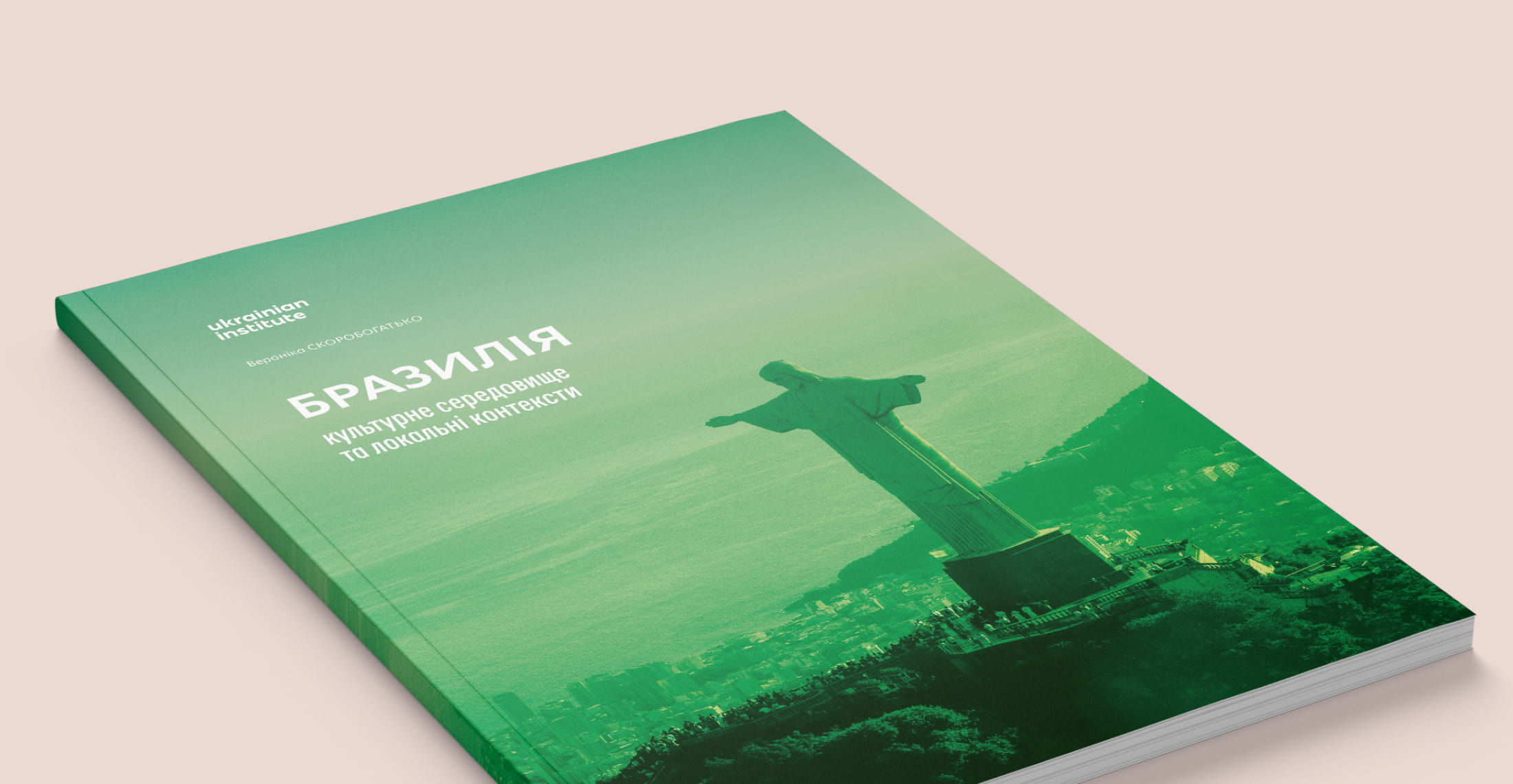

The study of Brazil’s cultural environment and local contexts is part of a broader research project conducted by the Ukrainian Institute in the countries of Asia, Africa, and Latin America.
The aim of the analytical study is to identify and consolidate data on the local cultural infrastructure, socio-political, historical, and cultural contexts, issues of identity, Indigenous peoples, other important local cultural phenomena, as well as sensitive topics and sociocultural dynamics in Brazil.
The field research methodology included conducting 17 expert semi-structured in-depth interviews with representatives of the diplomatic corps, the Ukrainian diaspora, Brazilian cultural, academic, and artistic actors, representatives of leading cultural institutions, the media sector, and civil society organizations in Brazil.
The findings will serve as a foundation for the further comprehensive and high-quality planning of priorities, projects, and working formats for the Ukrainian Institute, as well as for representatives of Ukraine’s cultural sector and diplomatic service in Brazil.
Foreign Policy Council «Ukrainian Prism»
Duration
2024 – 2025
Author
Veronika Skorobogatko
Brazil is the largest country in Latin America and one of the region’s key actors, giving it significant geopolitical and cultural importance for Ukraine. In the context of Russia’s full-scale war against Ukraine, Brazil is becoming an important direction for the development of Ukrainian cultural diplomacy beyond the Euro-Atlantic space. At the same time, the country is home to one of the world’s largest Ukrainian diasporas — around 600,000 people who have preserved Ukrainian culture, language, and traditions for more than a century, particularly in the state of Paraná.
Despite the widespread perception of Brazil as a single cultural community, the study demonstrates that Brazilian identity is multilayered and heterogeneous. The country consists of numerous regional, ethnic, and cultural identities shaped by its colonial past, migration processes, social structure, and the history of slavery. Discussions around decolonization, social inequality, and the rights of Indigenous peoples continue to have a significant impact on the country’s cultural and social development.
Brazil’s colonial past, the long history of slavery, and the period of military dictatorship (1964–1985) remain important elements of the country’s historical memory.
Brazil’s cultural environment is characterized by openness to international exchange and the strong role of the creative industries. The creative economy is one of the priorities of Brazil’s current cultural policy. At the same time, Ukraine remains underrepresented in Brazil’s cultural space and has often been perceived through post-Soviet or Russian narratives.
The political polarization of Brazilian society also affects perceptions of Ukraine. Some respondents noted that attitudes toward Ukraine are often connected to domestic political sympathies regarding Brazil’s current government. In addition, Soviet-era and anti-Western narratives continue to influence certain academic and intellectual circles, shaping cultural dialogue and perceptions of Ukraine.
At the same time, Brazilian audiences respond positively to emotional and personalized narratives, as well as themes of the struggle for freedom, resistance to colonialism, and cultural identity. Respondents emphasized that these themes could help Ukraine find common ground with Brazilian society and build a closer and more relatable cultural image.
Among the most promising areas for cultural cooperation, respondents highlighted music, cinema, visual arts, digital culture, gastronomy, and academic exchanges. Ukrainian artistic practices that combine traditional elements with contemporary forms of cultural expression are perceived particularly positively.
Respondents also stressed the potential of Brazil’s major international cultural events as platforms for strengthening Ukraine’s presence in the Brazilian cultural space. A significant challenge for the development of Ukrainian-Brazilian cultural relations remains the language barrier. Nevertheless, the openness of Brazil’s cultural environment, the strong potential of its creative industries, and the presence of a large Ukrainian community create favorable conditions for the development of long-term Ukrainian-Brazilian cultural partnership.
For more details on recommendations for Ukrainian – Brazilian cultural cooperation and potential challenges, please refer to the research in Ukrainian.