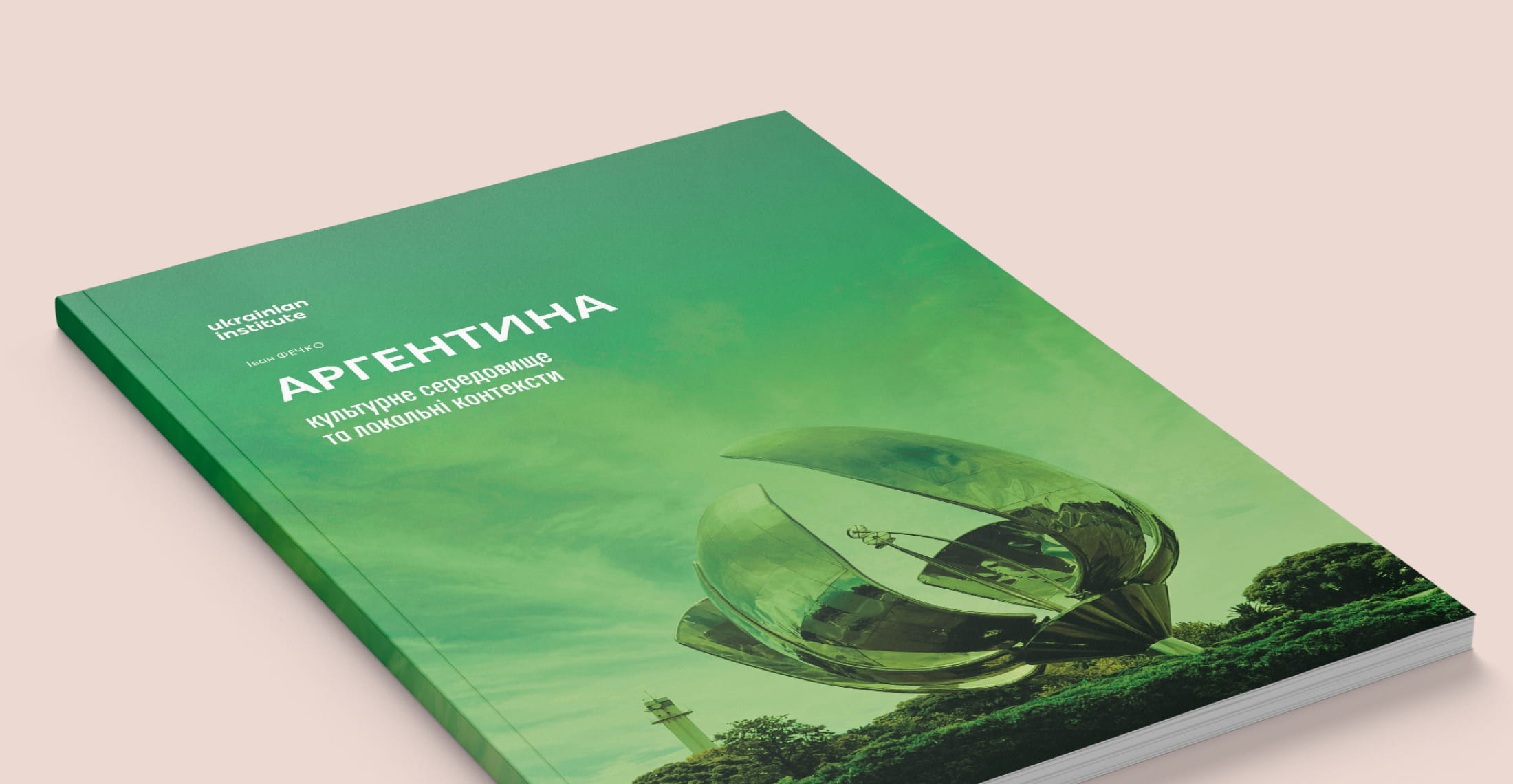


The study of Argentina’s cultural environment and local contexts is part of a broader research project conducted by the Ukrainian Institute in the countries of Asia, Africa, and Latin America.
The aim of the analytical study is to identify and consolidate data on the local cultural infrastructure, socio-political, historical, and cultural contexts, issues of identity, Indigenous peoples, other important local cultural phenomena, as well as sensitive topics and sociocultural dynamics in Argentina.
The field research methodology included conducting 18 expert semi-structured in-depth interviews with representatives of the diplomatic corps, the Ukrainian diaspora, Argentine cultural, academic, and artistic actors, representatives of leading cultural institutions, the media sector, and civil society organizations in Argentina.
The findings will serve as a foundation for the further comprehensive and high-quality planning of priorities, projects, and working formats for the Ukrainian Institute, as well as for representatives of Ukraine’s cultural sector and diplomatic service in Argentina.
Foreign Policy Council «Ukrainian Prism»
Duration
2024 – 2025
Author
Ivan Fechko
Argentina is one of the key countries in Latin America due to its cultural influence, regional leadership, and participation in global political processes as a G20 member state. In Ukraine’s Foreign Policy Strategy, Argentina is identified as a priority partner in the region, while the sizeable Ukrainian diaspora — approximately 300,000 people — provides an important foundation for the development of cultural diplomacy and people-to-people connections between the two countries.
Argentina is characterized by significant cultural and regional diversity. Argentine identity has been shaped by waves of European migration, the heritage of Indigenous peoples, and contemporary Latin American culture. At the same time, the country’s cultural environment differs substantially from region to region, requiring cultural initiatives and communications to be adapted to local contexts.
Argentina’s cultural sphere is open to international cooperation and encompasses a wide range of fields — from literature, theatre, and cinema to digital art, music, and performance practices. Large international festivals, book fairs, and artistic events play a particularly important role in the country’s cultural life and could become important platforms for a sustained Ukrainian presence in Argentina’s cultural space.
Following Russia’s full-scale invasion, the level of attention paid by Argentine society to Ukraine has significantly increased. While Ukraine was previously associated mainly with the Soviet past or the Chornobyl disaster, there is now growing interest in Ukrainian culture, contemporary art, and history. At the same time, knowledge about Ukraine remains limited, especially regarding the Ukrainian language, literature, and cultural identity.
Respondents interviewed for the study noted that certain elements of Ukrainian culture already have positive perception in Argentina, particularly among people who have had direct contact with Ukraine or the Ukrainian community. However, the actual level of cultural exchange between the two countries remains low.
The Ukrainian diaspora and the Embassy of Ukraine in Argentina play an important role in supporting Ukrainian-Argentine cultural relations. Diaspora organizations remain key intermediaries in promoting Ukrainian culture, organizing events, and fostering intercultural dialogue.
A separate challenge for promoting Ukraine in the Argentine context is the influence of Soviet and post-Soviet narratives, particularly among parts of the left-leaning intellectual elite. This affects perceptions of the Russian-Ukrainian war and often contributes to simplified or biased views of Ukraine. In this context, developing Spanish-language communication and creating dedicated information platforms for Argentine audiences are considered important priorities.
The study emphasizes that effective cultural representation of Ukraine in Argentina should not rely solely on the topic of war, but also on presenting Ukraine as a modern European state through contemporary art, music, gastronomy, cinema, sports, and democratic values. At the same time, the authors recommend avoiding cultural communication strategies based exclusively on opposition to Russian culture, as this may provoke mixed reactions among parts of the Argentine audience.
For more details on recommendations for Ukrainian – Argentine cultural cooperation and potential challenges, please refer to the research in Ukrainian.
Реалізація проєкту стала можливою завдяки фінансовій підтримці Міжнародного фонду «Відродження» у рамках проєкту № G55214 «Підсилення голосу України у світі» за сприяння громадської організації «Фундація культурної дипломатії».