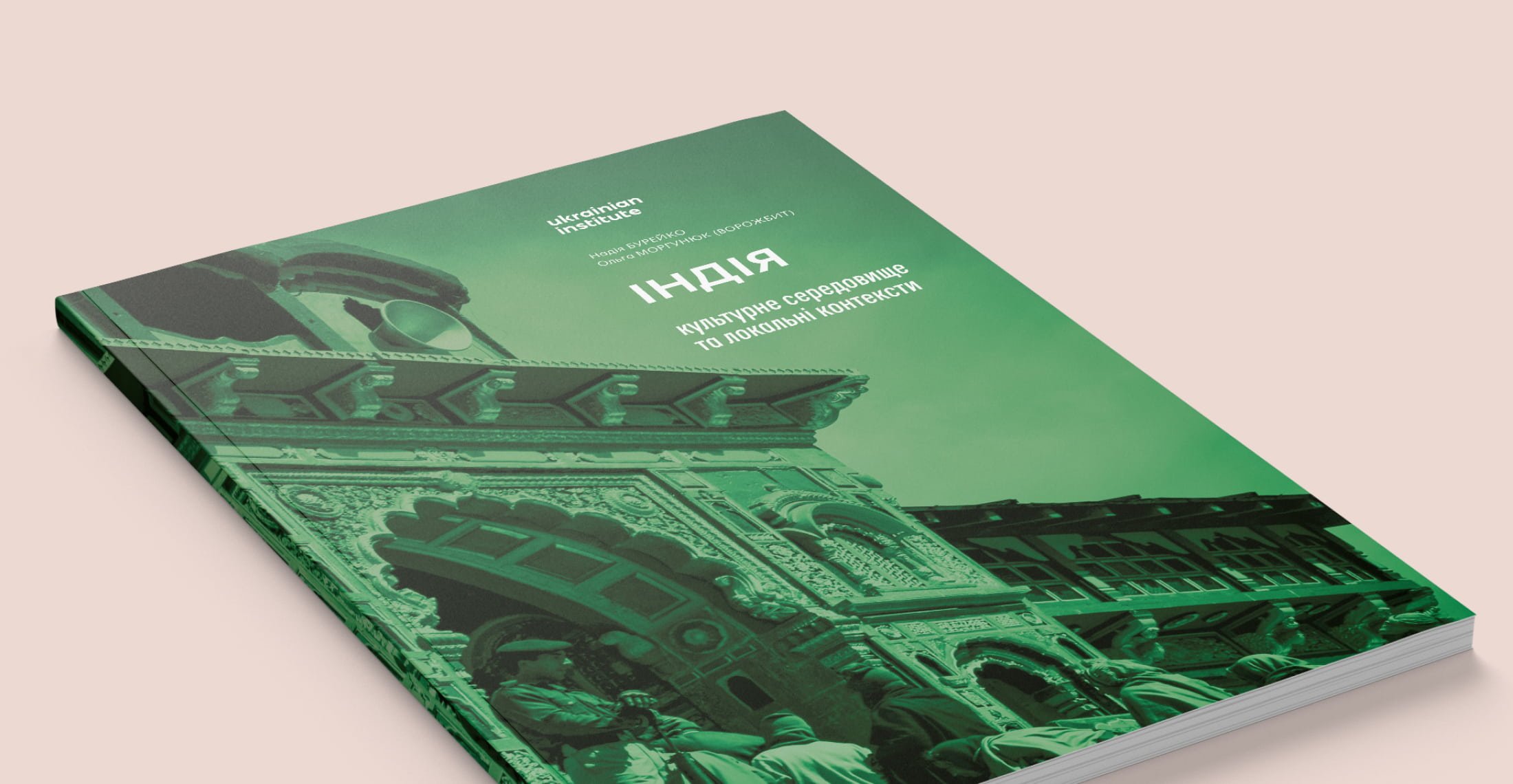
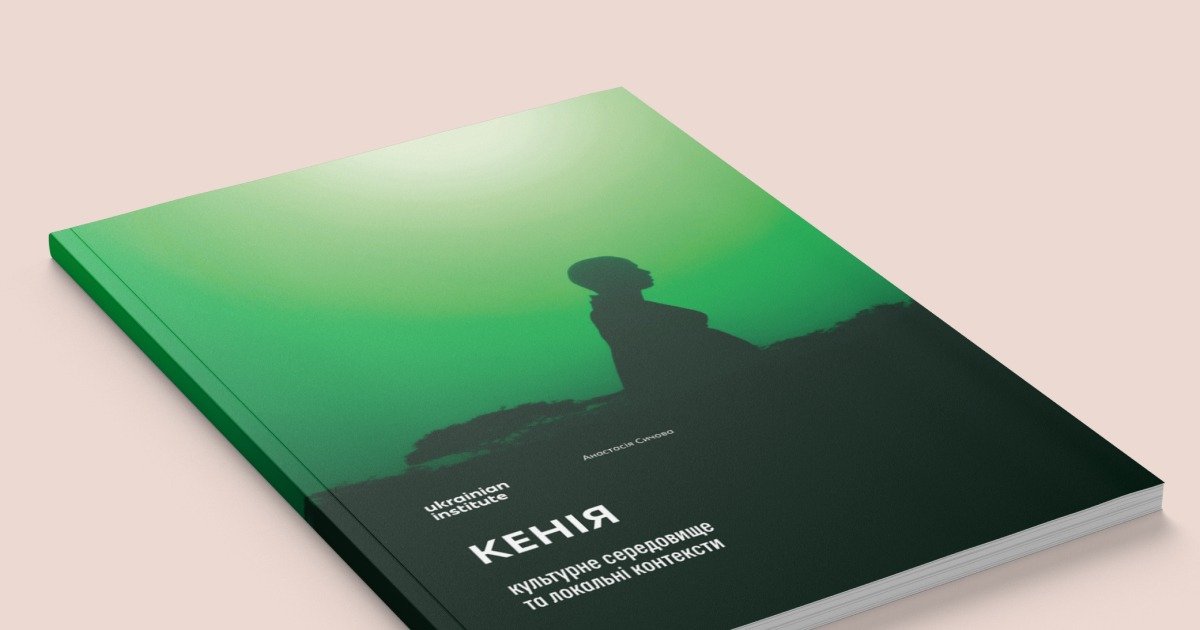
The research on cultural environment and local contexts in India is a part of the Ukrainian Institute’s comprehensive research project in Asia, Africa and Latin America countries.
The aim of the research is to identify and summarise data on the local cultural infrastructure, socio-political, historical and cultural contexts, matters of identity, indigenous peoples, other important local cultural phenomena, as well as sensitive topics and sociocultural occurrences in India.
18 experts participated in the field stage of the research, conducted in the form of semi-structured in-depth interviews. They covered members of the diplomatic corps and Ukrainian diaspora organisations, Indian representatives of cultural, scientific and art institutions, as well as media and civil society organisations in India.
The data obtained will create the basis for thorough and qualitative planning of directions, projects, and working formats for the Ukrainian Institute, representatives of the cultural sphere, and the diplomatic missions of Ukraine in India.
The Foreign Policy Council “Ukrainian Prism”
Duration
2024 – 2025
Authors
Nadiia Bureiko, Olha Morgunyuk (Vorozhbyt)
Editor
Hanna Shelest
Given India’s increasing role, the country has been defined as “important partner” in Asia region in the Foreign Policy Strategy of Ukraine in 2021. At the same time, India has been mentioned among priority countries in Public Diplomacy Strategy of Ukraine regarding promotion of Ukrainian export goods, education, and tourism.
India is the most densely populated country in the world with 1,409 billion people. There are 121 languages among its speakers. Researchers divide India into ten cultural areas based on cultural attributes (religion, language, and traditions).
Recently, the Indian identity became a key topic for intellectual and political discussions within the country. There are, in fact, two approaches to defining the Indian identity. The first one considers a combination of different religious and ethnic identities as a key to Indianness, whereas the second equates Indianness to Hinduism. The latter is supported by Bharatiya Janata Party (BJP), the ruling party in India, and is the basis of political ideology of Hindutva.
According to the Constitution, India is a secular state. However, considering the multicultural and multireligious peculiarity of the society, religious beliefs significantly influence social and political discrepancies as well as the cultural sector within the country. Depending on the region, religious beliefs affect local architecture, public heritage, contemporary forms of culture and traditions.
Although discrimination by caste is legally prohibited in India, caste remains an important element of the socio-political structure of Indian society. Art is often used to stress caste inequality and to manifest one’s identity of being oppressed due to caste hierarchy.
Tribes constitute about 8% of India’s total population (roughly 90 million people). There are over 500 groups with their distinct practices, customs, languages, and culture. India has the largest number of indigenous people in the world after Africa.
Among the most sensitive topics existing in the public discourse, interviewed respondents mentioned religion, particularly tensions between Hindus and Muslims. The Partition of British India, when it was divided into two states, India and Pakistan, was also identified as one of the most sensitive topics for Indian audiences. Concurrently, British colonial rule is openly discussed and is not a sensitive issue.
There is often an “exoticization” of India’s image in the perceptions from abroad, as respondents highlighted. It is explained by the insufficient dynamic of cultural dialogue between Europe and Asia, as well as by the historical representation of Indian culture as something unique, exotic, and not always connected to the global (and especially Western) context.
Due to the colonial legacy, Indian federalism has a centralised structure, making it a unique example in the world when the central government has clear prerogatives to intervene in state affairs. In the cultural sphere, this means that part of the decision-making process is the responsibility of the states, and each state has its own institutional architecture.
The cultural environment of India is defined by several trends:
the art scene is mostly concentrated in metropolitan cities;
private players are gaining the upper hand in India while establishing partnerships and setting trends;
the Indian government is the main source of funding for the cultural field;
the cultural development is influenced by new technologies and AI;
the number of censorship cases has increased for artists who are working with sensitive topics like religion or the coexistence of different cultures and ethnicities.
The USA, the UK, Germany, France, and Italy are frequently mentioned as the countries whose culture represents a particular interest for the general public in India. Interest towards these cultures is traditional and often stems from historical ties and/or economic relations. The respondents also remarked on the growing influence of Korean culture. Russian culture was argued to be popular in India due to historical relations with the Soviet Union. Concurrently, the Indian media often use Russian sources of information and, as a result, broadcast Russian narratives.
Before the full-scale Russian invasion, Ukraine was hardly mentioned in India’s public and media discourse, academic debate, or expert discussions. Consequently, the overall knowledge and awareness of Ukraine and Ukrainian culture was generally low. One of the reasons could be traced to the fact that foreign policy has been unknown beyond government establishment of New-Delhi for a long time. As far as attitudinal trends vis-à-vis Ukraine are concerned, there is a certain divergence in the way how they are manifested at the personal and public levels. On the other hand, since the annexation of Crimea and the beginning of Russia’s aggression in Donbas in 2014, India has adhered to neutrality.
Acknowledging the significant role of cultural and people-to-people contacts, in 2024, Ukraine and India signed the bilateral Programme of Cultural Cooperation and agreed upon organising festivals of culture in both countries. According to respondents, the most successful event of Ukrainian cultural diplomacy was the first Ukrainian culture festival “Future Perfect” in May 2023 in New Delhi.
For more details on recommendations for Ukrainian – Indian cultural cooperation and potential challenges, please refer to the research in Ukrainian and English.
The research was implemented thanks to financial support from the International Renaissance Foundation as a part of the G55214 project “Strengthening Ukraine’s Voice in the World”, with the assistance of the Cultural Diplomacy Foundation NGO.