
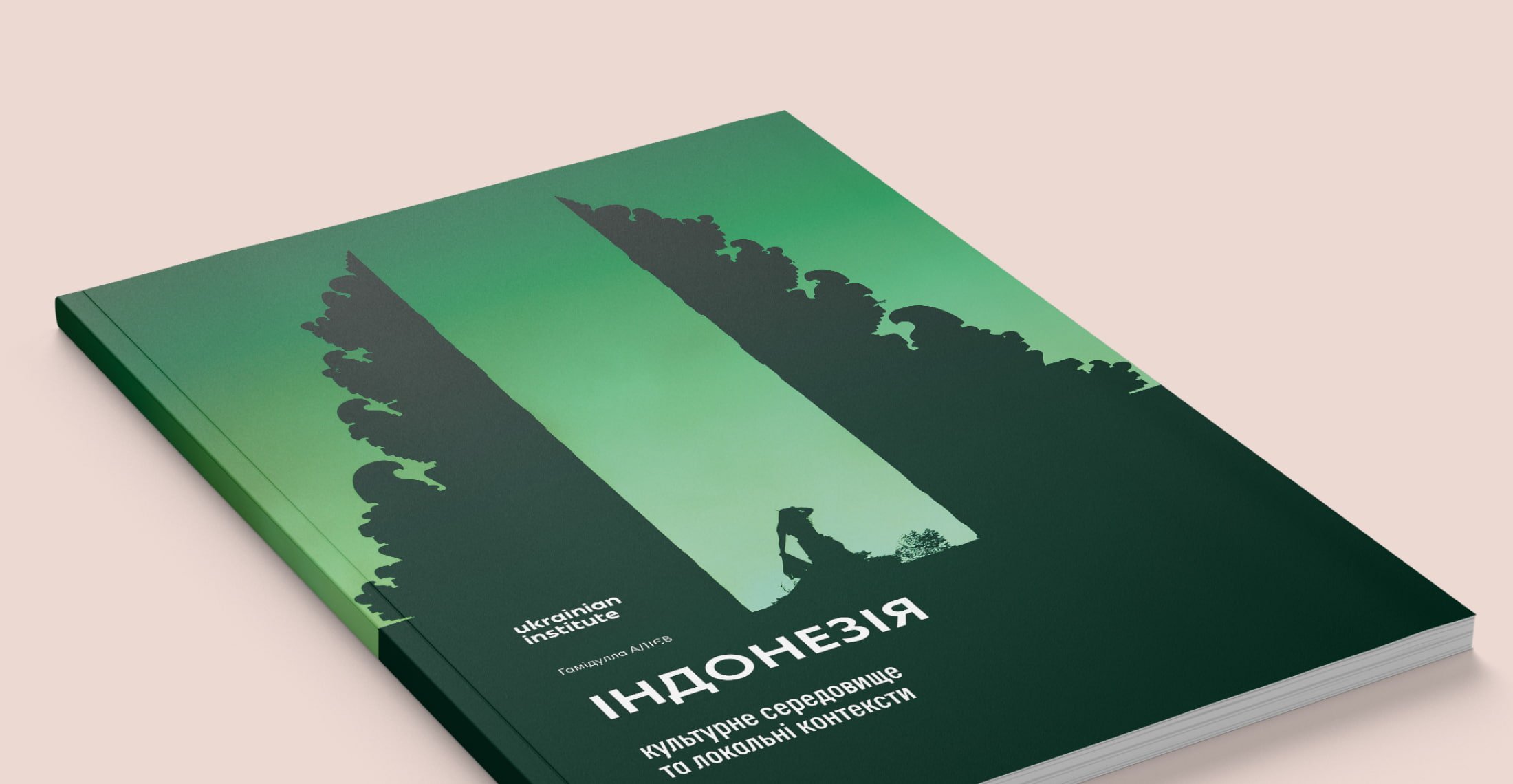

The research on cultural environment and local contexts in Indonesia is a part of the Ukrainian Institute’s comprehensive research project in Asia, Africa and Latin America countries.
The aim of the research is to identify and summarise data on the local cultural infrastructure, socio-political, historical and cultural contexts, matters of identity, indigenous peoples, other important local cultural phenomena, as well as sensitive topics and sociocultural occurrences in Indonesia.
19 experts participated in the field stage of the research, conducted in the form of semi-structured in-depth interviews. They covered members of the diplomatic corps and Ukrainian diaspora organisations, Indonesian representatives of cultural, scientific and art institutions, as well as media and civil society organisations in Indonesia.
The data obtained will create the basis for thorough and qualitative planning of directions, projects, and working formats for the Ukrainian Institute, representatives of the cultural sphere, and the diplomatic missions of Ukraine in Indonesia.
ADASTRA Think Tank
Duration
2024 – 2025
Author
Hamidulla Aliev
Project manager
Bohdan Veselovskyi
Interviewer
Dmytro Suslyk
Indonesia is the largest island state in the world and a multiethnic country. For Indonesia, the policy for Indigenous peoples, or Pribumi (“first who stepped onto the ground” in translation), is particularly important. Pribumi include 50-70 million of people in Indonesia, that is, 17-25% of general Indonesian population. According to the Constitution of Indonesia, the state recognises and respects the rights of Indigenous communitiesas long as they exist.
Awareness of the struggle for independence is both one of the key factors in the formation of Indonesian national identity. and a valuable thematic intersection with the modern history of Ukraine. The consequences of colonial rule remain actively discussed in Indonesian society.
The national identity policy of Indonesia is based on “unity in diversity” motto and is connected to the concept of Pancasila (“Five precepts”), proposed by Sucarno, the first President of Indonesia. These five principles are: Indonesian nationalism, humanism (or internationalism), democracy guided by the consent, social justice, and belief in the one God (recognition of theistic religions). In a slightly modified form, these precepts formed the basis of the Constitution of Indonesia in 1945.
Religion is a highly sensitive issue, since only six religious affiliations are recognised officially by Indonesia: Islam, Protestantism, Catholicism, Hinduism, Buddhism, and Confucianism. Another sensitive topic for Indonesian society is LGBTQ+ community and a number of controversial historical events.
Overall, Indonesian culture was shaped through synthesis of local traditions and diverse external influences, including those from colonizers (the Netherlands at first, and later Japan), as well as great powers (the USA, and China). The large number of ethnicities amplifies languages and traditions diversity, whereas country’s religious multiplicity can be explained by Indonesia’s geographical location which is in intersection between ancient trade routes of Far East, South Asia, and Middle East. All of this caused a unique sociocultural context.
Indonesian cultural environment’s structure is decentralised due to significant political and administrative changes that took place in the 1990s. The country’s transition from a concentration of power to a decentralised democratic approach has had a significant impact on the methods of governance and the implementation of cultural policy. These reforms have given considerable powers to provincial and local authorities, particularly in the field of culture.
The Ministry of Education, Culture, Research and Technology is responsible for funding cultural initiatives (through the “Indonesiana” Endowment Fund), preserving cultural heritage and developing cultural industries (through the Directorate General of Culture), and integrating culture into the overall socio-economic development strategy (through the Creative Economy Agency). The ministry is facing one of the major challenges respecting uneven distribution of funding: more developed regions of Indonesia are receiving a larger share of funds, which exacerbates regional cultural disparities. At the regional level, cultural development is handled by the Arts Councils.
Despite the freedom of expression is an inalienable right in the Indonesian Constitution, there are cases of censorship and criminal prosecution of journalists for their professional activities. This points to systemic problems that undermine the foundations of a democratic society.
Indonesia has traditionally pursued a “free and active” (bebas aktif) foreign policy, strategically balancing between major powers, particularly the People’s Republic of China, Japan and the United States of America. After Prabowo Subianto was elected president, Indonesia renewed its multi-partnership model, emphasising pragmatic balance (partial multi-alignment) with a priority on economic growth and regional security, without abandoning its traditional course of uneven alignment with the West.
Indonesia has taken a neutral stance on Russia’s war against Ukraine. Official Jakarta has condemned the military action, however, has avoided directly accusing Russia of being the aggressor. In addition, Indonesia’s information space is filled with pro-Russian narratives spread through social media. At the same time, Indonesia provides systematic support for Ukraine’s sovereignty and territorial integrity. President Joko Widodo became the first Asian leader to visit Kyiv during the full-scale war between Russia and Ukraine.
As Indonesia’s aim to be seen as a country of “moderate Islam” (where Islam coexists harmoniously with democracy), interaction between the Muslim communities of both countries could be one of the bridges of mutual understanding and support between Ukraine and Indonesia. In addition, the historical fate of the Crimean Tatars is an important topic that arouses particular interest and understanding in Indonesia. As the country with the largest Muslim population in the world, Indonesia is extremely critical of the oppression of Muslims’ rights, especially in the context of Russia’s occupation of Crimea.
For more details on recommendations for Ukrainian – Indonesian cultural cooperation and potential challenges, please refer to the research in Ukrainian.
The research was implemented thanks to financial support from the International Renaissance Foundation as a part of the G55214 project “Strengthening Ukraine’s Voice in the World”, with the assistance of the Cultural Diplomacy Foundation NGO.