
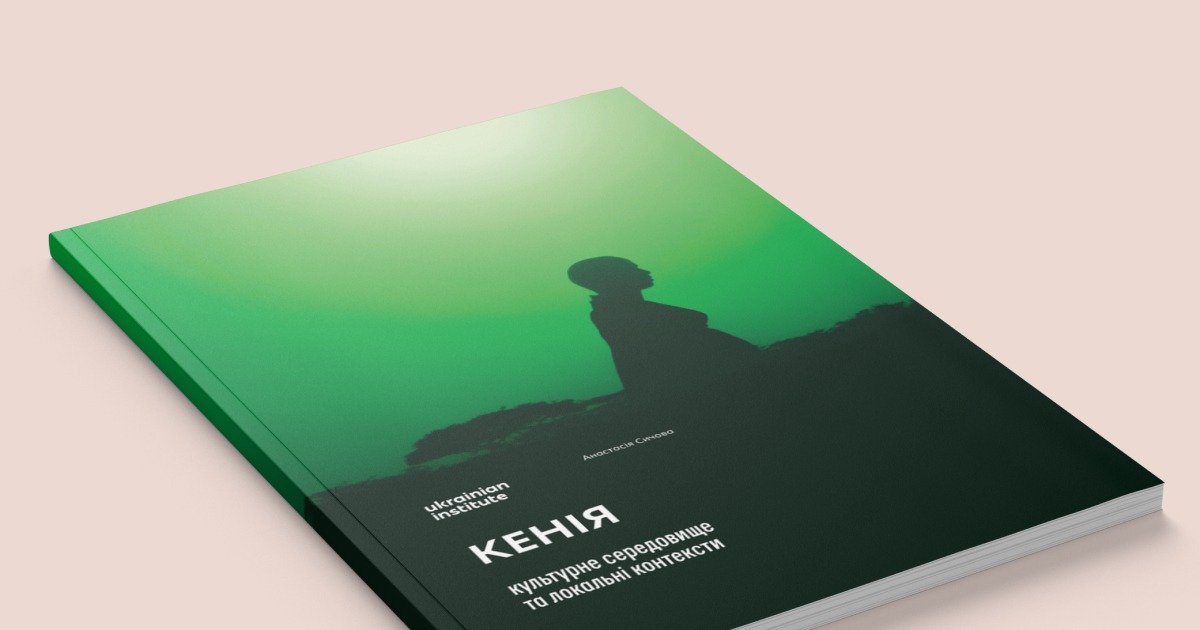

The research on cultural environment and local contexts in Kenya is a part of the Ukrainian Institute’s comprehensive research project in Asia, Africa and Latin America countries.
The aim of the research is to identify and summarise data on the local cultural infrastructure, socio-political, historical and cultural contexts, matters of identity, indigenous peoples, other important local cultural phenomena, as well as sensitive topics and sociocultural occurrences in Kenya.
19 experts participated in the field stage of the research, conducted in the form of semi-structured in-depth interviews. They covered members of the diplomatic corps and Ukrainian diaspora organisations, Kenyan representatives of cultural, scientific and art institutions, as well as media and civil society organisations in Kenya.
The data obtained will create the basis for thorough and qualitative planning of directions, projects, and working formats for the Ukrainian Institute, representatives of the cultural sphere, and the diplomatic missions of Ukraine in Kenya.
ADASTRA Think Tank
Duration
2024 – 2025
Author
Anastasiia Sychova
Project manager
Bohdan Veselovskyi
Interviewer
Dmytro Suslyk
Diplomatic relations between Ukraine and Kenya have become more dynamic and focused on specific areas of mutual interest over the past five years. In 2019, the Republic of Kenya expressed its readiness to become Ukraine’s entry point to the East and South African markets. In 2024, the Office of the President of Ukraine announced a plan to create grain hubs in Kenya, positioning Ukraine as a guarantor of Kenya’s food security.
Kenyan society perceives Ukraine primarily as an agricultural exporter. Respondents of the study noted that Russian aggression against Ukraine has fostered a growing sense of solidarity with the Ukrainian people due to shared experiences and an understanding of what it means to be colonised. Moreover, respondents drew parallels between Ukrainian and Kenyan national characters. However, awareness of Ukraine remains limited for several reasons: Ukraine’s relative absence from the information space in African countries, and in Kenya in particular; a lack of systematic interaction between Ukraine and Kenya; the persistence of Cold War framings that view Ukraine as part of the Western bloc in opposition to the USSR and the Russian Federation; and the influence of Russian propaganda that attributes Soviet achievements solely to the Russian Federation and perpetuates the myth of a special kinship between Ukrainians and Russians.
Several factors should be considered aiming to change the status quo and plan Ukraine’s long-term, strategically oriented cultural diplomacy in Kenya. In particular, one of the key stereotypes about Africa is the perception of the continent as a single cultural entity, which erases the authenticity of Kenyan culture by folding it into a unified pan‑African conglomerate.
A distinctive feature of the Kenyan cultural environment is its multiculturalism, rooted in the traditions of more than 43 ethnic groups that constitute Kenya’s indigenous population. When working with Kenyan partners, it is therefore important to understand the recipient’s ethnicity; the cultural traditions of the relevant tribe; how cultural influences shape national identity; and the geographical context of the project’s implementation. Ethnic specificity remains dominant in politics as well. It becomes particularly visible during presidential elections as contests for ethnic advantage.
The presence of the UN headquarters in Nairobi is an influential factor in the Kenyan society’s multiculturalism and its openness to other cultural traditions.
“Afrobubblegum” is an important philosophy in contemporary Kenyan art, popularised by the film director Wanuri Kahiu. According to this, approach African art can be simultaneously fun, violent, fantastic, and frivolous, with the primary purpose of bringing joy. Pan-African narratives also play a central role in Kenyan artists’ international interactions.
Key trends in Kenyan cultural development include a renaissance of indigenous culture, cross-border cooperation and co-production, digitalisation, competition between tendencies toward Westernisation and Sinicisation, and the politicisation of art.
Kenya’s cultural infrastructure is highly decentralised and operates at both central and regional levels. Cooperation between state institutions and non-governmental organisations is based on partnership principles. NGOs serve as a link between government institutions and Kenya’s creative elite, providing civil servants with additional information and assessments of the cultural sector, including feasibility evaluations for further promotion.
Kenya is a recipient of international financial aid, and government investment in cultural projects is limited. State institutions for cultural development do not receive adequate funding, so primary support comes from international partners and private donors on a “project first, investment later” basis. Kenya also lacks a dedicated mechanism for financing artistic, cultural, and creative projects, and standard procedures for accessing state funds have not been established.
Building dynamic cultural cooperation between Ukraine and Kenya requires, first and foremost, a deeper understanding of the broader political context and forecasting changes resulting from elections. An effective entry point into the Kenyan cultural space is the simultaneous establishment of cooperation between state institutions and representatives of the non-governmental sector. Interaction with state institutions makes it possible to obtain permits for cultural production and to involve national media in event coverage, while non-governmental actors contribute experience in resolving organisational issues and in establishing communication with the public sector, local stakeholders, and artistic hubs.
Key obstacles to Kenyan – Ukrainian cooperation may include a lack of state funding on both sides, the Kenyan side’s preference for long-term projects, and a slower pace of interaction compared with typical Ukrainian approaches.
For more details on recommendations for Ukrainian – Kenyan cultural cooperation and potential challenges, please refer to the research in Ukrainian.
The research was implemented thanks to financial support from the International Renaissance Foundation as a part of the G55214 project “Strengthening Ukraine’s Voice in the World”, with the assistance of the Cultural Diplomacy Foundation NGO.