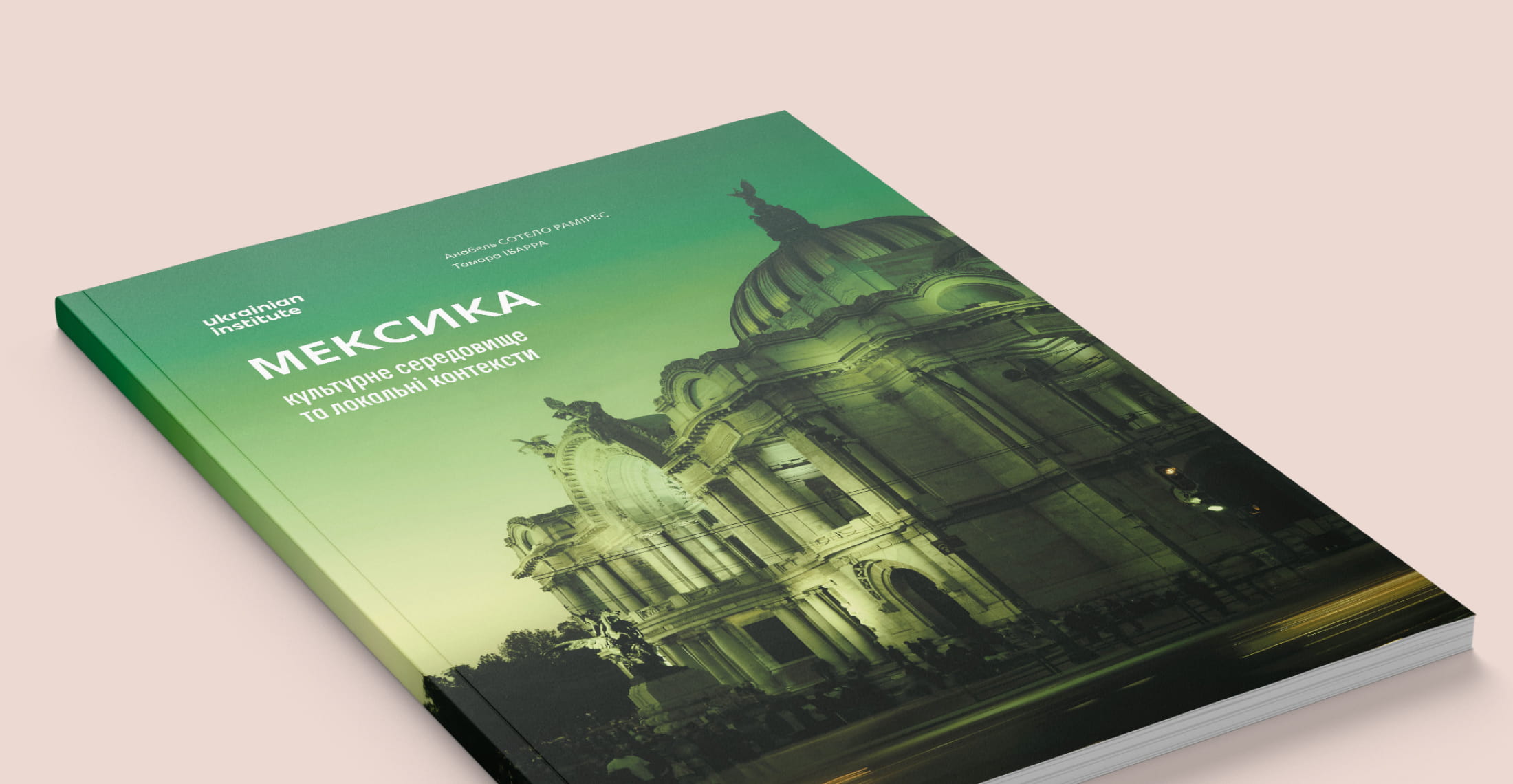


The study of Mexico’s cultural environment and local contexts is part of a broader research project conducted by the Ukrainian Institute in the countries of Asia, Africa, and Latin America.
The aim of the analytical study is to identify and consolidate data on the local cultural infrastructure, socio-political, historical, and cultural contexts, issues of identity, Indigenous peoples, other important local cultural phenomena, as well as sensitive topics and sociocultural dynamics in Mexico.
The field research methodology included conducting 14 expert semi-structured in-depth interviews with representatives of the diplomatic corps, the Ukrainian diaspora, Mexican cultural, academic, and artistic actors, representatives of leading cultural institutions, the media sector, and civil society organizations in Mexico.
The findings will serve as a foundation for the further comprehensive and high-quality planning of priorities, projects, and working formats for the Ukrainian Institute, as well as for representatives of Ukraine’s cultural sector and diplomatic service in Mexico.
Authors
Anabell Sotelo Ramires, Tamara Ibarra
Duration
2024 – 2026
Mexican identity is multilayered and shaped by the country’s colonial past, the heritage of Indigenous peoples, revolutionary history, social inequality, and the constant rethinking of its relationship with the United States. Contemporary public discourse is strongly influenced by issues of colonialism, racial inequality, violence, disappearances, memory, and social justice.
Mexico is one of the countries with the highest number of UNESCO World Heritage Sites and actively integrates Indigenous heritage into its contemporary cultural policy. At the same time, the country continues to engage in discussions about the decolonization of cultural space and the redefinition of national identity.
In the international cultural sphere, Mexico often faces stereotyping and folklorization. Mexican culture is frequently perceived through images of mariachi, exoticism, or violence, which, according to respondents, oversimplifies the reality of contemporary Mexican culture. In response, Mexican artists actively engage with themes of deconstructing stereotypes, criticizing the global perception of Mexico, and searching for new forms of cultural representation.
An important role in Mexico’s cultural diplomacy is played by Chicano culture — a transnational space between Mexico and the United States that creates ongoing cultural exchange through art, linguistic hybridity, and shared identities.
Mexico’s cultural environment is characterized by the strong role of independent artistic initiatives, a high level of international integration, and the active participation of artists in socio-political debates. In Mexico, culture often serves as a space for criticism, resistance, and reflection on social issues.
In the context of Ukrainian-Mexican relations, Russia’s war against Ukraine is often perceived in Mexico through the lens of the country’s complex history with the United States and its traditional foreign policy doctrine of non-intervention. Part of the Mexican political and media environment tends to view Russia as a counterbalance to American influence, creating favorable conditions for the spread of Russian narratives. At the same time, most Mexicans view Kremlin policy negatively, while Mexico’s cultural and academic sectors remain open to cooperation with Ukraine.
The research also demonstrates that Ukraine and Mexico share potential for deeper cultural dialogue through common themes of memory, resistance, the struggle for identity, experiences of violence, social inequality, and decolonial processes. In this context, culture can become one of the key spaces for rethinking Ukraine within Mexican society and for developing long-term partnerships between the two countries.
For more details on recommendations for Ukrainian – Mexican cultural cooperation and potential challenges, please refer to the research in Ukrainian.
The implementation of the project was made possible thanks to the financial support of the American Councils.